Sunday, June 25, 2006

21st century transportation


Within the last 4 days, I've travelled over 4,500 kms across the North American Continent. The journey has been exhausting but fun. I had to travel from Trenton to Philly for a flight from that metropolis all the way to Orlando in central florida. In Orlando, the company that I'm working for was holding a 2 day conference. From there it was a quck hop over the swamps of florida to Miami by propeller driven aircraft. Miami is a fun city to say the least. It was a brief but very interesting stay where much was learned. That city's inhabitants appears to possess vice and indolence in prodigious quantities. However, I've also discovered, though quite accidentally, one possessed with great inner beauty, wit, and virtue. Hopefully I was not mistaken in my perceptions.

In anycase, my flight home on saturday was cancelled due to a hurricane. As a small compensation, the airline just happened to give me a ticket from Miami to NYC. And today I took that journey and then made a few short hops by train from NYC back to rural PA. It's soooo good to be home!

I harvested 2 pounds of string beans from my garden this evening. These beans, when cooked, tasted far fresher than the super-market variety.

Sunday, June 18, 2006

Garden Update


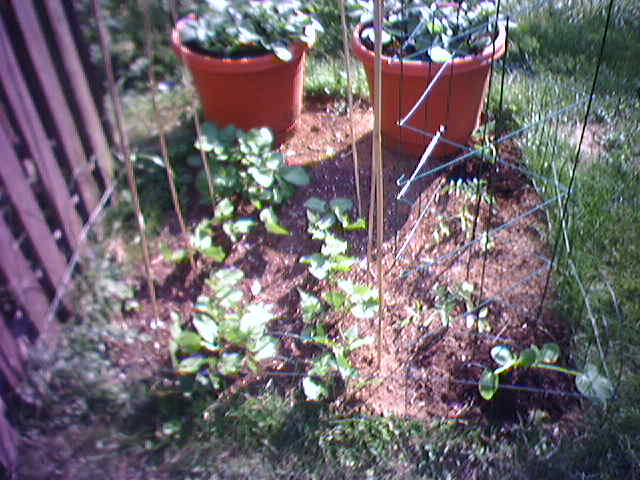
The weather is really getting hot. The garden is doing well but requires daily watering. 6 weeks until the potatoes can be harvested!!!

Crafting some weapons


I've finished two long overdue projects this weekend. One is a longbow that I've been working on for the last month. It's a 69'' red oak bow with a draw weight of 60#. This bow was entirely crafted from hand tools. 60 pounds of force is enough to kill any large game on the north american continent, I shall use it this autumn to take down some deer. Or at least I hope I'll be hunting this fall if I'm not bogged down with coding interfaces for Increment 2.


The second big project is a hand forged steel axe. The axe is mild steel that I tempered and then quenched. The axe head was forged about 8 months ago from an old rail spike with wood charcoal providing the carbon. I just never had the time to mount the axehead on a handle until now. The handle is made of oak which had been carved and polished with hand tools.

Sunday, June 11, 2006

Garden Update


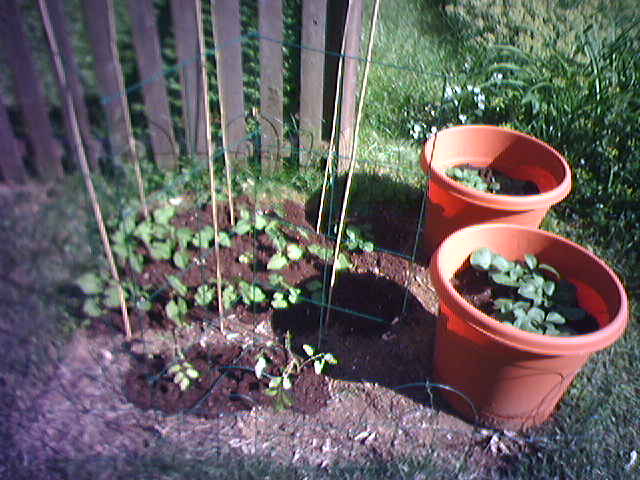
My garden is flourishing like never before. I can't even find any aphids or potatoe bugs at this point. Just several spiders and lady bugs. There is much to be said about just how productive a small 2m by 1m plot can be. Nature can be used to work for us instead of against us. Prior to the industrial revolution, most farming was essentially done this way. Soil fertility, when organic agricultural principles are applied, can be maintained almost indefinitely. Unfortunately our current problem with soil erosion and desertification all stems from the fact that we're not maintaining the ecosystems of the land that's being farmed. Now if only there was a way to do intensive organic agriculture without intensive inputs of manual labor. If we could just get machines or some kind of automata to matain large agricultural acreages without oil and natural gas then our problems would be solved.

Stream fishing is hard!!!


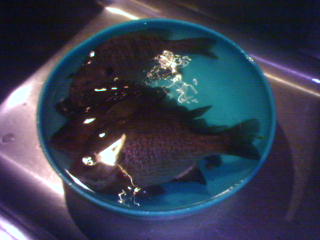
Fishing in streams is exceedingly difficult. Stream trouts are very easily spooked and finicky about what they'll eat. The water is choppy and all fishing is done by feeling the tension on the line. Making a long story short, I saw several big, juicy trout swimming around, but none of them would take my bait!!! So after 3 hours of hard fishing, I managed to capture 5 small crappies. They will make one decent meal but not much more than that.

Sunday, June 04, 2006

The Art of Ecological Warfare


Heavy doses of synthetic pesticides serves to keep pest populations at a minimum. This is good and well except for one, small, side-effect. Pesticides kill not only harmful species but also good ones, in fact, it sterilizes the soil of most plant, insect, and microbiotic species. Pesticides in conjunction with synthetic fertilizers are the foundations of the green revolution. Modern agriculture as we know it depends on these two ingredients. Unfortunately, modern agricultural practices tends transform fertile land into a barren growing medium. After several successive applications of chemical pesticides, the soil becomes almost devoid of life. In effect, pesticides eliminates the natural fertility of soil, making it unproductive without large inputs of chemical fertilizers. Thus the use of pesticides have made modern food production dependent upon continuous application of fossil fuel based fertilizers.
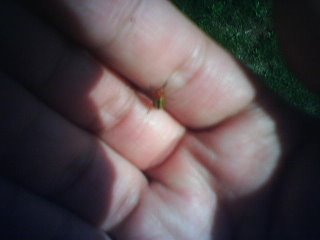


Now under normal conditions, an organic gardener like me would never consider the use of chemical pesticides, but the events of this weekend almost turned me to the dark side. On saturday, I noticed many small holes on one of my potatoe plant's leaves. Upon closer examination, I found that a plague of potatoe bugs was systematically eating my plant. To add insult upon injury, these insects were copulating madly and laying batches of tiny eggs everywhere. Shocked by this discovery, I proceeded to examine the garden under a magnifying glass, and discovered a miniature world.

In biological terms, my garden is very much like an island. A piece of ground had all of it's previous flora removed, as I had done when I pulled out all of the grass and weeds and tilled the soil. Most of the area's fauna were also removed by this process. Lawn grass hosts a series of grass eating insect species such as crickets, fireflies, Mayflies, slugs...etc. Such species cannot venture into my garden due to the lack of food and/or cover. Most insect species within my backyard lawn cannot actually survive in my garden due to the same reasons. But a subset were apparently able to. It appears that a certain ecology had evolved within my garden that is significantly different from that of my lawn. Under the cover of the broad leafed squash and string bean plants at ground level, there were lots of centipedes and earth worms, but no milipedes, since the big leaves and daily watering gave the area under it perpetual shade and moisture-laden soil. Under the container based potatoe plants, the earth worms that I had left with the compost had multiplied, and they were until recently the only fauna in these containers. Under the tomatoe plants, which is at last growing vigorously taller, an ant colony had appeared where there was open soil with no vegetation and perpetual sunlight. Even as I was observing them, a legion of ants were busy hauling a dead centipede back to their colony.

Going upwards from ground level, there were aphids sucking on the stems of my string bean plants. Looking closer, I saw that the aphids were actually being HERDED by ants up and down the stalks of my plants. The ants were tiny, and the aphids were even smaller. I could not kill them for fear of breaking my still growing bean stalks. In my potatoe plants, the stems were largely empty in the healthy ones. In the one sick potatoe plant, the stems were crawling with potatoe bug hatchlings which were in a gray-camo color, these I proceeded to exterminate whereever they were found. In one section of the plant, I noticed that a small spider was eating a young potatoe bug.
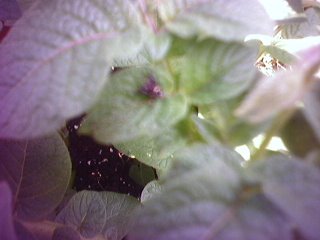
Going higher to the leaf canopy, the sick potatoe plant was in bad shape. There were a score of mature potatoe bugs and they were all doing one of three things: eating, humping, or laying eggs. And they are doing it on my EXPENSE!!! These mature potatoe bugs were quickly dispatched with my fingers and dropped near the ant colony to be recycled. But I knew that there were more hatchlings hiding all over the stem structure of that plant, thus I went through my lawn and found 3 more spiders just like the one I saw on the potatoe plant, these, I placed strategically upon the stem regions of the ailing potatoe plant.

Along the leaf canopy cover of the string beans, there were several "herds" of dozens of aphids each, and they were all happily sucking away on my hard work. The ants were guarding their domestic cattle. But I saw two lady bugs who were happily eating the aphids, the ants were not much use due to them lacking the ability to fly like the ladybugs. Seeing this, I quickly gathered around the lawn and found 6 lady bugs, these I deposited on the leaves of my string bean and squash plants. It was anarchy, aphids were being taken out all over the place.
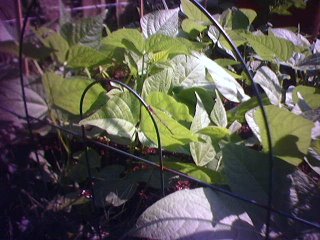
Above the leaf canopy, fruit flies were flittering from flower to flower, gathering precious pollen and nector. And even there, predators roamed. Dragon flies and wasps were having a field day, they were getting their fill of fruit flies. Now from my perspective, fruit flies don't really harm or benefit my garden, since all of my plants are capable of both sexual and asexual reproduction. Thus, I didn't disturb this predator-prey relationship. Now as I was glancing over the unshaded portions of my garden where my tomatoe plants were situated, I noticed that weeds were cropping up at various points. These weeds were competing for nutrients with the tomatoes, and this cannot be allowed. Thus the weeds were entirely removed from that area, and then I covered dead grass/weed clippings around the base of the entire tomatoe plant but not directly under it. I wanted to preserve the ant colony for ants are useful creatures. The clippings ensure that weeds will have no chance of re-emerging due to lack of sunlight. In short, I used the dead weeds to prevent new weeds from growing along the periphery of the tomatoe plants.
Monday, May 29, 2006

Transplanted Squash saplings


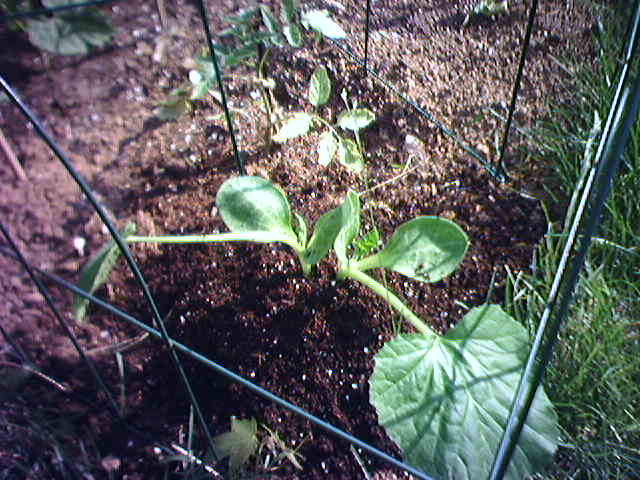
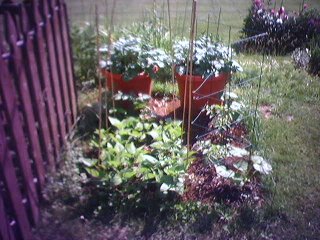
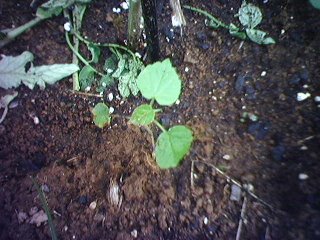
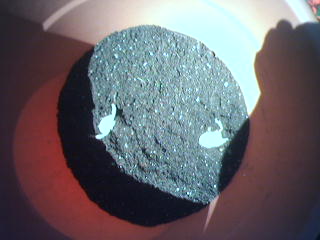
The garden has done fairly well during the little family trip. The potatoe plants have grown entirely out of their containers, I'll have to put up wooden supports pretty soon. The string beans have grown much bigger, and some of them are even beginning to climb their scaffolding. The tomatoes have recovered somewhat, there are new green leaves on those 2 plants. Still there are plenty of yellowish leaves on those 2 saplings, I think one would be lucky to expect any fresh garden tomatoes this year. In anycase, I set down the two squash saplings that were growing indoors for the last 3 weeks. The saplings were transplanted with plenty of compost to ensure solid growth. I think this small organic garden can safely hold some additional herb plants such as basil or chives but not much more.
Sunday, May 28, 2006

Some thoughts on conservation


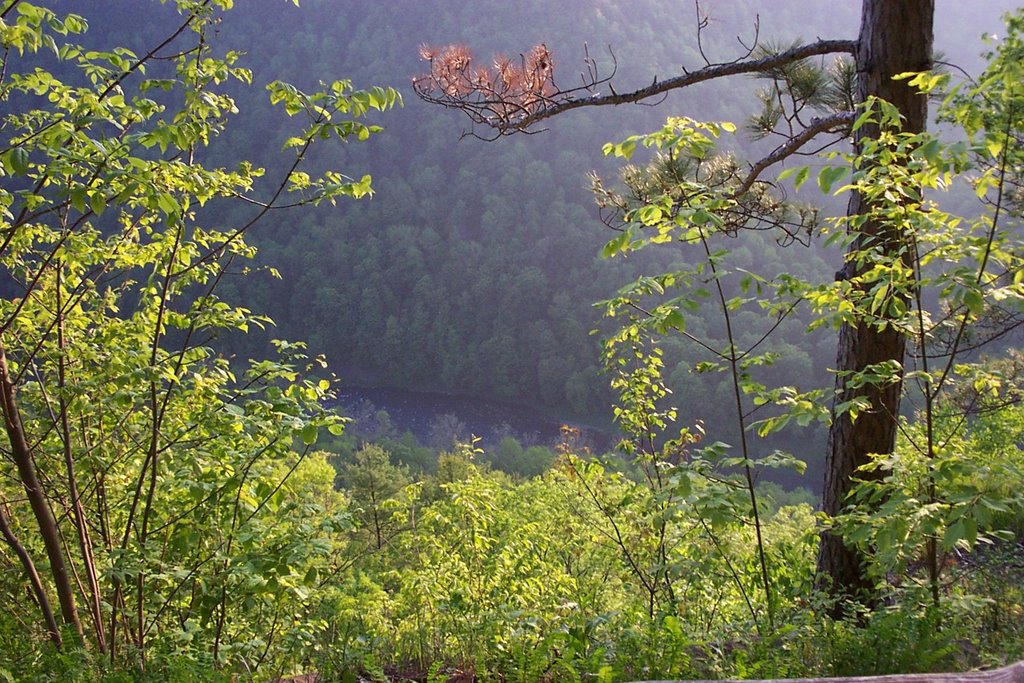
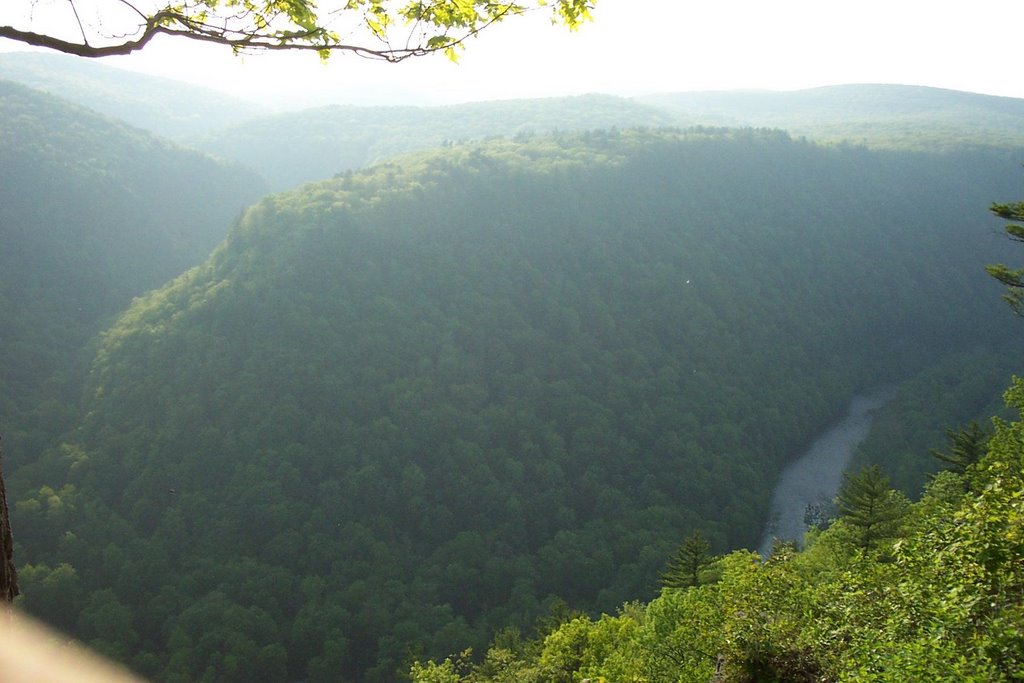
This weekend I went on a "family bonding" trip with the parents. It turned out to be a semi-mystical, if not downright religious, experience. We visited the grand canyon of Pennsylvania located 30 miles northwest of Williamsport, PA. We parked our car along a river that was surrounded by 2 huge mountain sides. Going over a rough dirt trail, we hiked to the top of one mountain side. The climb was a grueling one, the path was extremely steep and treacherous in some areas.



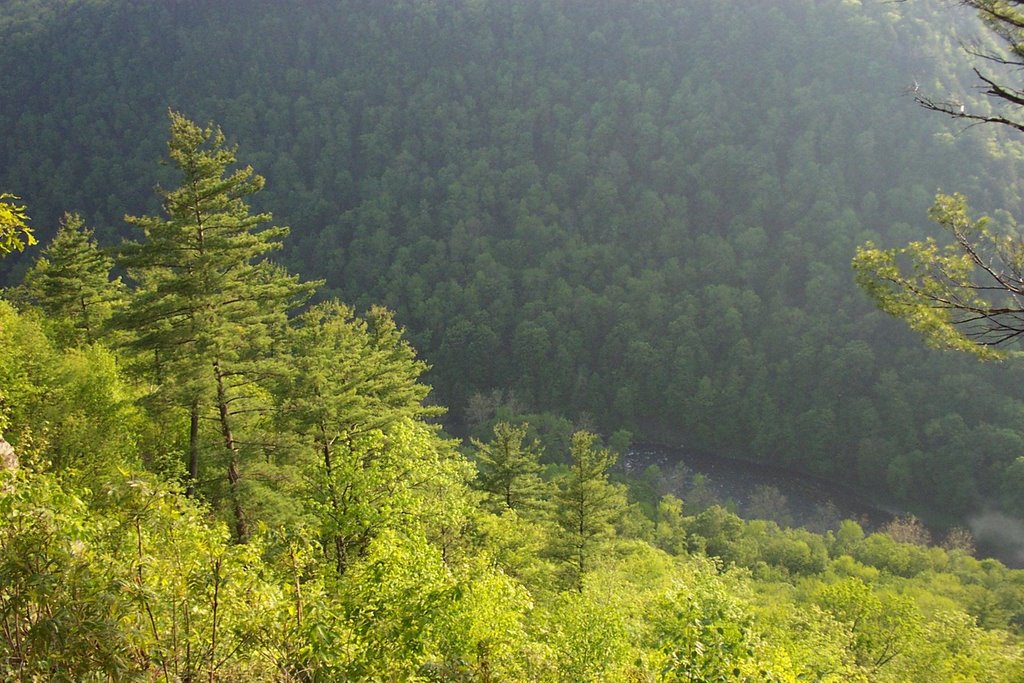
After an hour, we reached the summit, which is over 700 meters above the river. At the peak, the view was awe-inspiring. The river was a glistening thread of silver, winding it's way between two magnificently broad mountain slopes. The slopes themselves were heavily forrested, so that in the setting sun, it seemed that great stream of silver was strengthened, broadened, by two geldings of emerald green. Both faces of the canyon stretched far into the distance. we could see swirls of mists and cloud formations beneath us out to some 20 to 30 miles away. There were falcons flying hundreds of meters below us. The sight was almost too much for me to take in, mere words cannot do it justice.


This canyon was created by processes ungoverned by any form of reason or intelligence. Over millions of years, that river had carved a 700 meter valley out of the side of a huge mountain. Trees filled in the niche, providing for an abundence of aboreal mammals. These small creatures thus sustained the wonderous falcons which soared with such speed and grace. That canyon was a mosaic, a tapestry created by nature whose threads were that of geology, erosion, and of course, life. That canyon due to it's remote location and difficult terrain, had attracted few visitors. Besides my family, we encountered no more than 10 other people along the entire hike. This place seems magical, untouched by man and all of his foibles. I marvel at such a natural wonder, yet at the same time, I cannot help but feel a touch of loss. There are few such places left in the world. Humanity is capable of intelligence and ingenuity, yet we cannot come even close to creating such perfection. Sure, we can wipe out that canyon in the blink of an eye, but destruction is always so much simpler than creation. What are we really doing with the consciousness that has been bestowed upon us? We use our sentience to take these gems of nature and we hack it down, pave it over. We transform such beauty into parking lots, shopping malls, townhouses, and of course, office buildings. And what is it all for? So we can brag about a raise? Maybe a promotion? Or perhaps to impress that pretty girl on the other side of the office? There seems to be so much amiss with the human condition. I don't believe that we are really meant to be drones in an office, generating products that only exists to create more people. We are probably not meant to live a life where we have to watch ourselves die one second at a time while killing everything else around us. This philosophical rant has truly gone on enough, I should stick to earthly matters such as potatoes and rabbits. In anycase, this was one cool trip!
Sunday, May 21, 2006

Garden Update


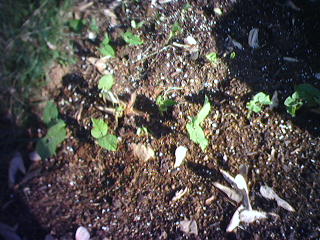
This has been such turbulent week for me. Too many things are happening at once, some good, others not so good. In anycase, my garden seems to be mostly flourishing. The potatoes and the string beans are growing very rapidly, I've already added in about 8 inches of additional compost into my container grown potatoe plants within 2 weeks and the growth of the potatoe plans shows no signs of slowing down. The String bean plants that survived the culling are now beginning to span out. I've put in bamboo stakes to give them a framework to grow on.


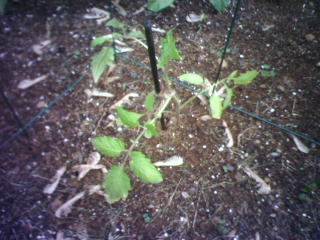
The tomatoe plants that I transplanted last week are not doing so well. The stalks seems to have weakened since the transplant.

I'm fairly sure that the bed in which the plants were set down have been properly fertilized and loosened. The problem may be that the soil acidity levels are not compatible with this breed of tomatoe saplings. In anycase, I gave these 2 plants some liquid feed, hopefully this will work.

Sunday, May 14, 2006

Weather Warriors


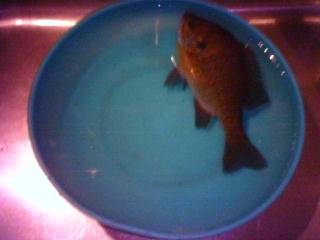
Fishing today was extremely difficult, the weather by the lake was unusually cold. At 57 degrees Farenheit, the wind chill factor was a great dis-incentive to be out there in the first place. I found that by fishing very close to shore and of course extending the length of line between the floater and the hook itself, a certain niche of fish could be caught. That breed being the carnivorous sunfish that dwells near the waters under trees. Sunfish are stunning creatures, embellished with a beautiful red/orange mark on their stomach. Using this strategy I was able to capture two medium sized sunfish, not very impressive but enough for a nice dinner and definitely a pleasure to behold.

Around 6:30 pm the weather became very unfavorable, storm clouds were overhead, there was a splattering of rain, and the temperature dipped below 50 degrees. Under those conditions, I decided to take what I've won and head back home.

Saturday, May 13, 2006

Garden plants are blooming!

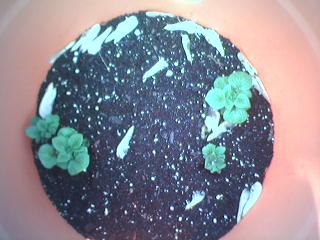
The potatoes seems to be doing very well, all 6 bubs have bloomed. I'll wait for the stalks to grow to at least 4 inches before covering them with compost.


The string beans have all bloomed into rows of pretty shoots. I'm going to wait 2 more weeks before putting up scaffolds to hold the vines.

Sunday, April 30, 2006

Cold fishing weather on Sunday


I went fishing in Lake Eagle today. The weather was far too cold to catch much. Bass season is now in progress and I did manage to catch one young small mouth bass. In anycase, the one catch that I kept today was a 2 lb Sunfish. Musky season is going to start soon around here, I should stock up on some bait leeches.

Planting day: Potatoes and String beans

Saturday was the perfect day to start off my garden this year.


Potatoes:

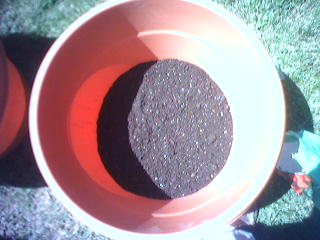
For the organic container grown potatoes, I used 3 layers of mixtures in each container. The multilayering nature of these containers is needed to simulate basic soil structures in this region of the country.

1. 5 cm of gravel at the bottom of the bucket for drainage. The gravel serves as a barrier to retain valuable organic nutrients and soil run off while allowing for the flow of surplus water out of the container.


2. 10 cm of peat soil for moisture retention. The peat soil must hold a certain amount of water to keep the potatoe plants moist during the periods between watering. However, any amount of water over that holding capacity would simply flow through the gravel layer.


3. 25 cm of compost/topsoil mixture holding exactly 2 chitted potatoe buds.


Each of my 10 gallon containers holds exactly 2 chitted buds. The process of chitting greatly increases the yield of each potatoe plant as well as shortening the duration of the growth cycle. Basically, you let pieces of potatoes sit out in the sun in a warm dry place for between 3 to 4 weeks. Roots would grow out of each bud. These chitted buds are thus planted and a quick watering applied to kick off the growth process.


String Beans:

Growing String beans requires a few back-breakingly tedious steps.

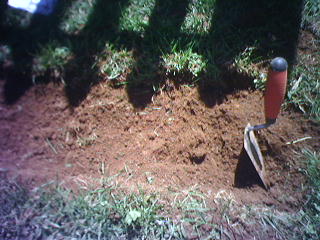
1. A good sized patch has to be dug out and the soil broken down to at least 15 cms deep. This process took an hour of hard digging and tilling.

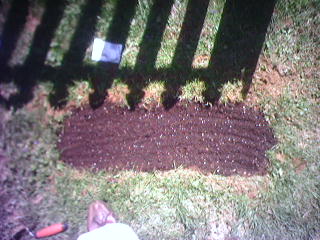
2. After tilling is complete, weeding begins. Manually, I extracted all the deep grass and weed roots from the garden bed. Harmful root eating insects were killed where found, helpful earth worms were left in place. After this step, the bed of loose topsoil was mixed with equal parts of organic compost.


3. String bean seeds were buried 4 cm deep into the bed at intervals of 3 cm apart. A good watering was given to kick off the growth season.


I have my baby tomato plant growing inside of the house, next week, I'll expand the patch to accomadate the tomato section.


Friday, April 28, 2006

Preparing for Organic Potatoe Planting


The weekend is finally here, and I can stop thinking about office politics and J2EE architectures for a few days!!! If the truth is to be spoken, my job has way too many responsibilities. In anycase, with work out of the way, I've gotten the opportunity to purchase the materials needed for early potatoe plantings tomorrow.


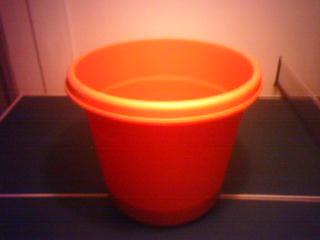
This year, I'll be trying the container based approach. That is, all of my potatoe seedlings will be growing within a container under precisely controlled environmental conditions. This effort requires the usage of 2 ten gallon containers, forty lbs of organic compost/humus top soil mixture, and 20 lbs of rough gravel. From my online research, it appears that the container based approach is the most efficient form of organic potatoe farming. It supposedly delivers the highest yield per unit of surface area taken.


For the chitted bulbs, I'm going to be using the reliable Golden Wonder breed of potatoe. This breed has never failed me before. Per reference, a 2 gallon container volume can be expected to grow between 3 to 5lbs of Golden Wonder potatoes per harvest. With 2 possible harvests a year here in the northeast, a total yield of 6 to 10 lbs per 2 gallons of volume is the norm. With my current container volume capacity of 20 gallons, I would expect a minimal yield of between 60 lbs of 100 lbs of potatoes this year.

Sunday, April 23, 2006

First catch of the season


I went fishing with my father this afternoon. I'm always amazed at how much father-son bonding occurs over such a simple affair. Just the spooling of lines, cutting of bait, the cast, the anticipation, all of these things conjure up fine memories of past days. So many times, we've fished that same spot by Marsh Creek, it's turned into almost a family tradition.

Fishing is a skill requring a great deal of observation and patience. Two species of different fish rarely attacks the lure in the same way. Fish of the same species but of differing ages approach the bait differently as well. Environmental factors such as temperature, precipitation, noise-level, wind all serves to impair one's judgement of the target at hand. It truly takes a long time before one is able to determine the breed, age, and temperament of the catch on it's first bite of the bait. Today, the catch was fair, four mature Blue Gills all weighing over 2 pounds each.

A fine beginning to spring

After an agonizing winter in Chicago and Trenton, Spring has finally caught up with me. And by Spring, I don't mean the framework written by that Propagandist, Rod Johnson!!! The flowers are blooming, the birds are chirping, and the bass season officially starts this week! As an expansion of the "Summer Hunter Gatherer" blog last year, I have created this blog as a continuing journal of my pursuits in hunting, gathering, agriculture, and other nature related activities. Hopefully, some trifle of knowledge and understanding can be gained this year in the pre-industrial arts practiced by so many for so long. It is a real pity that our society has become so mechanized and technological. For in these older ways of the hunter/gather and farmer, there seems to be such simplicity, yet of which much truth and goodness exists. Our modern civilization has so much in knowledge and yet a great majority of it seems false and empty. But enough of this rant, this blog is about picking berries and shooting animals, not some kind of philosophical treatise, so enjoy! And who knows? One may even need to use these skills someday if the oil prices keep going up and up.