Sunday, September 24, 2006

Nomadic Vacation 9/19 Middle of Nowhere

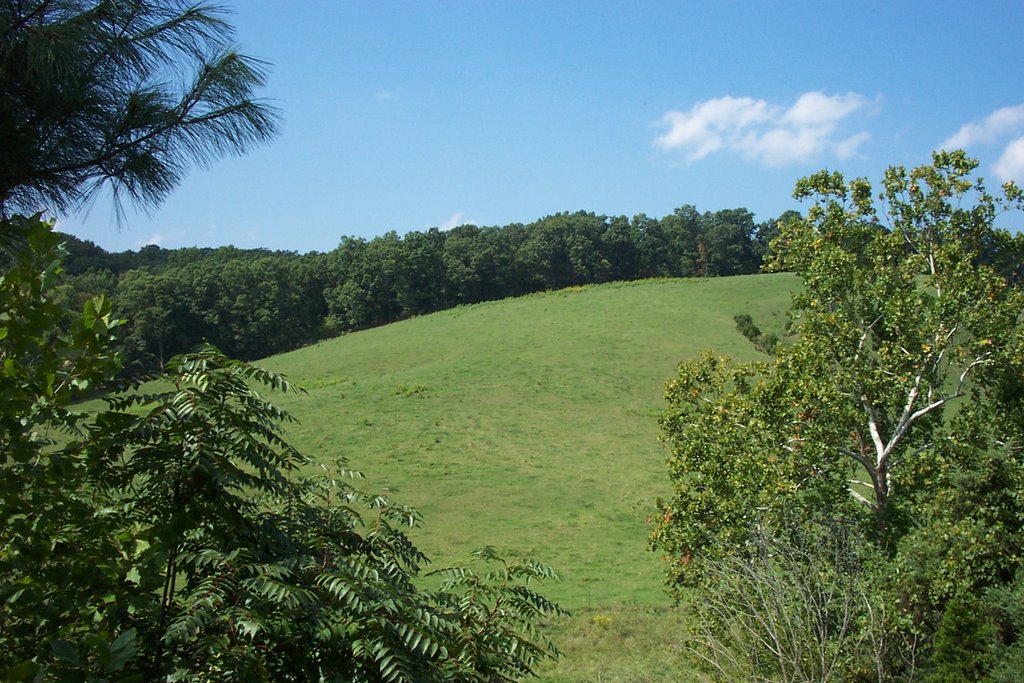
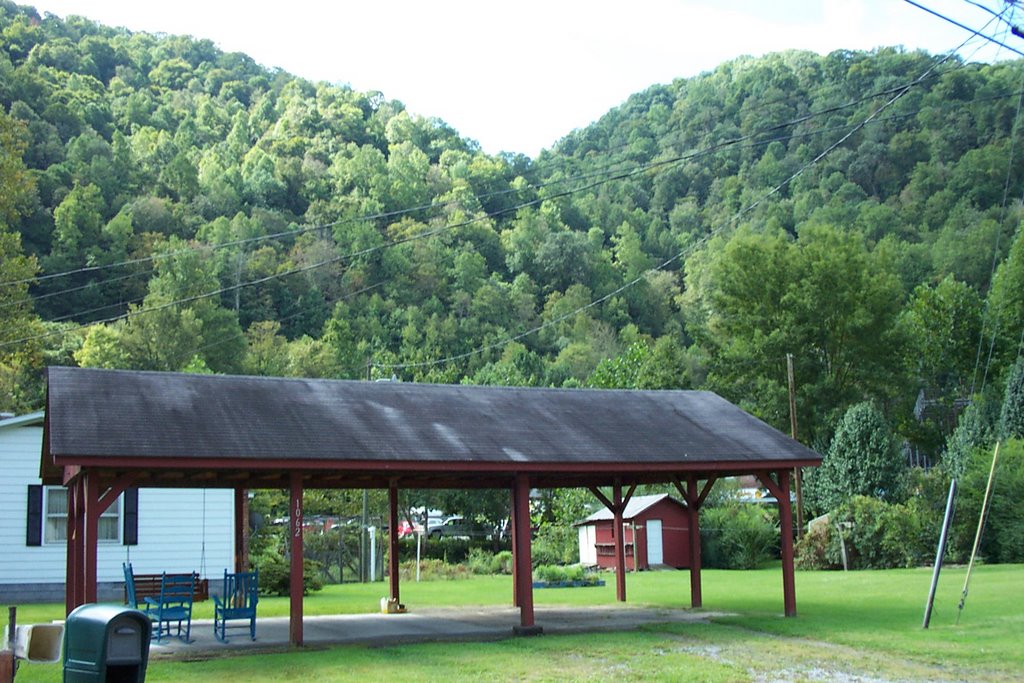
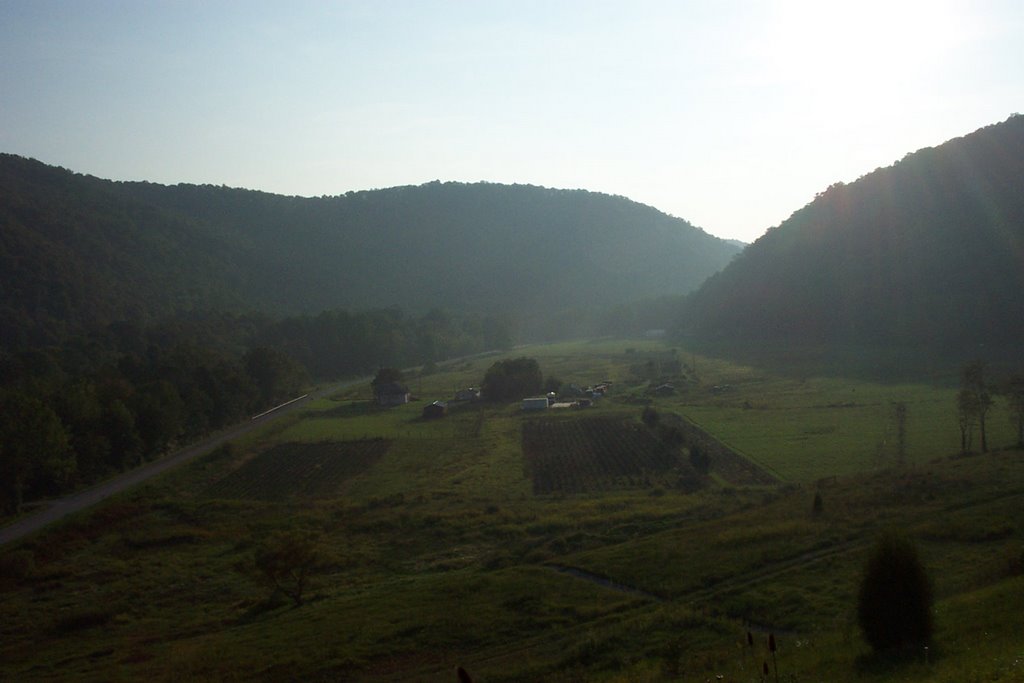
I left Grundy early in the morning and drove onwards. The roads became quite treacherous with many twists and turns. To make matters worse, the roads ran along mountain-sides or across steep ravines. These geographical obstacles served to impede my progress. There seemed to be deer everywhere, I saw them along hillsides, mountaintops, and valley bottoms. Every so often a small settlement or homestead was seen. They all seem isolated, self-contained, and rather cut off from the wider world. In a sense, these homesteads are closed-systems where most foodstuffs are collected and consumed locally. Every little homestead seems to have at least some land being farmed and some domesticated animals. Every settlement seemed to possess either windmills, water-wheels, or solar panels. One cannot help but envy these smallholders, their societies have far greater sustainability than the Mega-cities and suburbs that we live in.

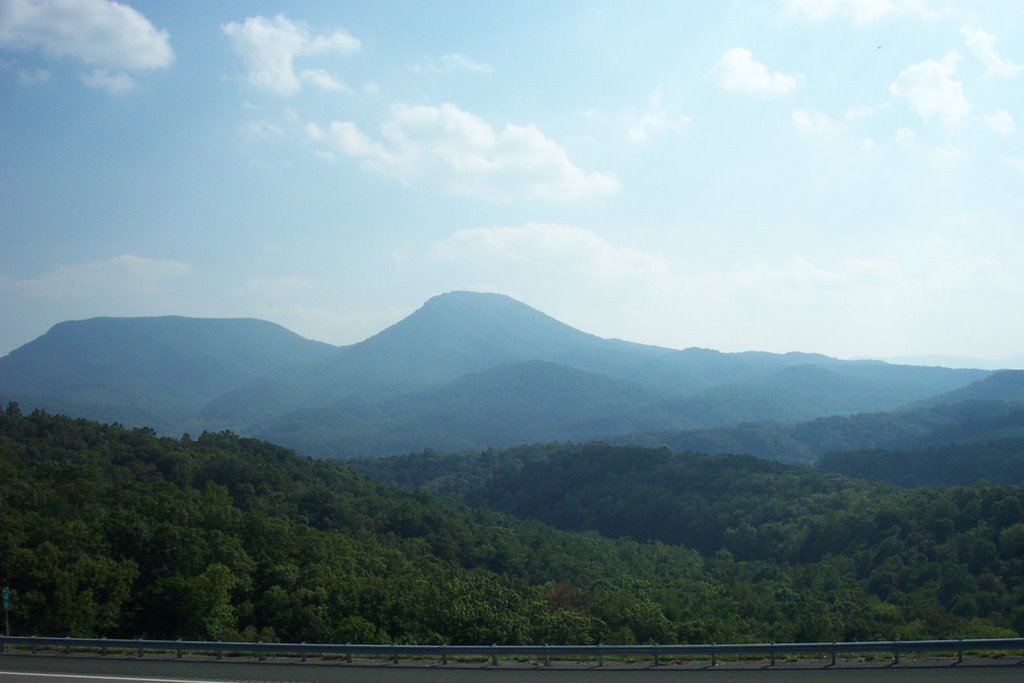
By early afternoon, I had crossed from West Virginia into the Tennesse border. Quickly speeding past Knoxville, I caught sight of several M1-Abrahm Tanks along with an unmanned Robotic Predator Drone. It appears that through a quirk of planning a pre-industrial era society is existing alongside an information age military. In anycase, I drove onwards. Past Knoxville, the Smokey mountains region was at last reached. After driving ever deeper into those mountains, I arrived at the small village of Robbins. 10 Miles west of that village, I came upon my hunting lodge, located at the absolute center of nowhere.

After getting in touch with my hunting guide Lathern, I settled down in that little lodge. Lathern mentioned that early tomorrow we should try out my boar hunting weapons: the rifle and long bow before proceeding to hunt. For apparently, the wild boar has some major differences in physiology when compared to the domesticated pig. Some 6,000 years ago, the wild and domesticated hog would've been identical. But humanity stepped in and modified the basic structure of the pig. The tusks and fangs for hunting were the first features to cull. It's thick, furry hide was then selectively breed out in favor of a hairless varient for ease of butchering. It's brain was then bred to be smaller and smaller to the point where the domestic pig's average brain size is 2/3 that of the wild varient. Wild boars have 2 thick bone/hard cartilage plates extending from the base of it's spinal column down to it's rib cage, these bone plates protect the boar from his prey and from other boars. Humans bred out the feature entirely so that domestic hogs have only small vestigial plates of soft(edible) cartilage.

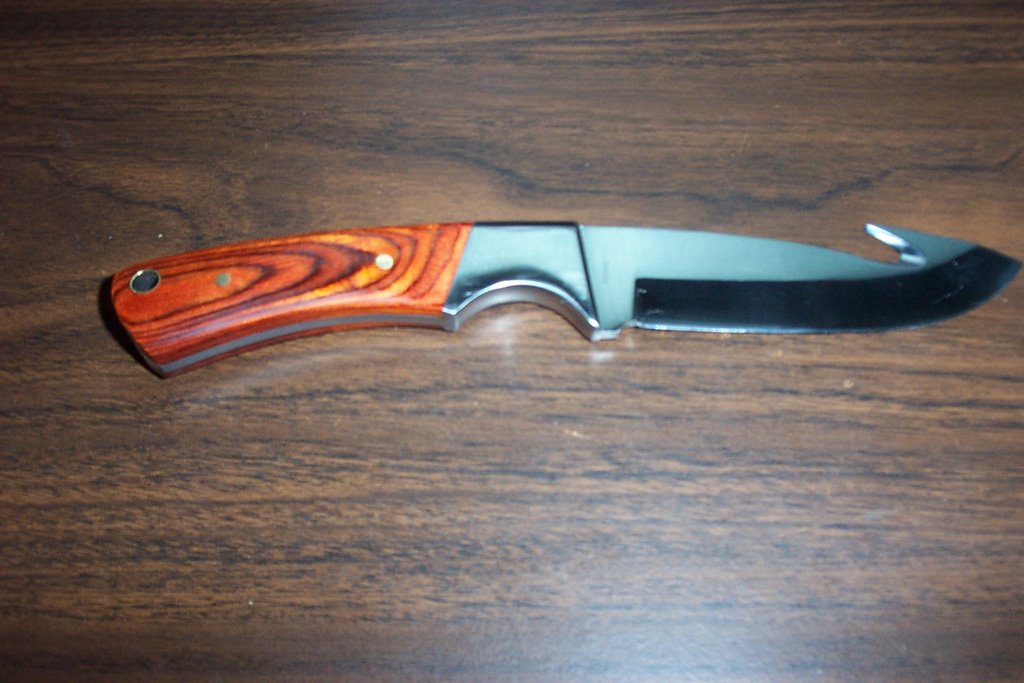
Knowing that wild boars will have the advantage of tusks and fangs, thick hide and bone armor, I at once began preparing my weapons. The hunting knife, the weapon of last resort, was sharpened until it took on a wicked edge. I made sure that my rifle was clean and well oiled. My home-made ammunition was examined and re-examined for defects. Each and every bullet was precision loaded to be able to consistently hit a quarter at 100 yards. My hand-crafted ash arrows were all spined to within a pound of the bow that it'll be shot from. These spined shafts were then braced with Turkey feathers for flight stabilization, after which, a coating of tallow was applied to prevent wood-warping.
Each arrow was tipped with a triple-bladed carbon steel broadhead. These broadheads, I sharpened on a soapstone until each carbon-steel edge could slice through a piece of paper. Then the edges were coated with a thin layer of vegetable oil to aid in the smooth penetration of flesh and bone.
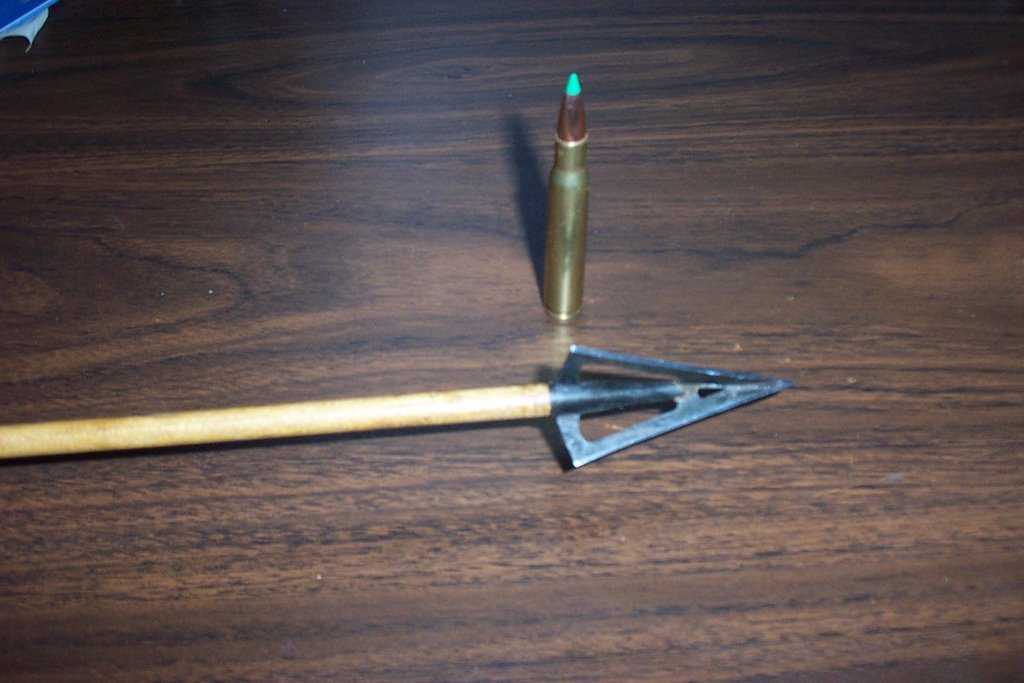
A precisely spined arrow will consistently hit a pie plate at 40 yards. A sharpened heavy broadhead will slice entirely through the upper torso of large animals like deer or goat out to 30 yards. With my weapons in a state of extreme readiness, I felt at last ready for the hunt tomorrow.

Saturday, September 23, 2006

Nomadic Vacation 9/18.....Mountain settlement


A bright and beautiful day it was on monday. I sped away from home towards the remote smoky mountains of Tennessee. Being a journey of some 800 miles, I brought along a huge supply of trail-mix along with the last few pounds of acorn meal. The journey was off to a brisk start. I quickly sped through Delaware and Maryland to reach coastal Virginia. While driving through this span of fertile Virginian territory, I made frequent stops at sites of historical significance.

At the small town of Shenandoah, I visited the famous battlefield where an outnumbered army of confederate soldiers charged up a hill lined with Union artillery and repeating rifles and won the day. The small villages of Roanoke and Greenville which boasts as the respective birthplaces of General Stonewall Jackson and American Explorer Davy Crockett were also visited. Last but not least, the railroad station at Manassas Junction could not have been left unseen. At Manassas, the rebels under the command of Stonewall Jackson, held back 2 separate invasions by the armies of the Union. While one can argue that the intentions of the confederacy may have been tainted with the tarnish of slavery, noone can doubt the courage and warcraft of it's fighting men. In anycase, the bravery of the South was no match for the industrial might of the north. The crushing of agricultural societies by industrial ones is an event all too common in the recent history of mankind, regardless of cause or intent.

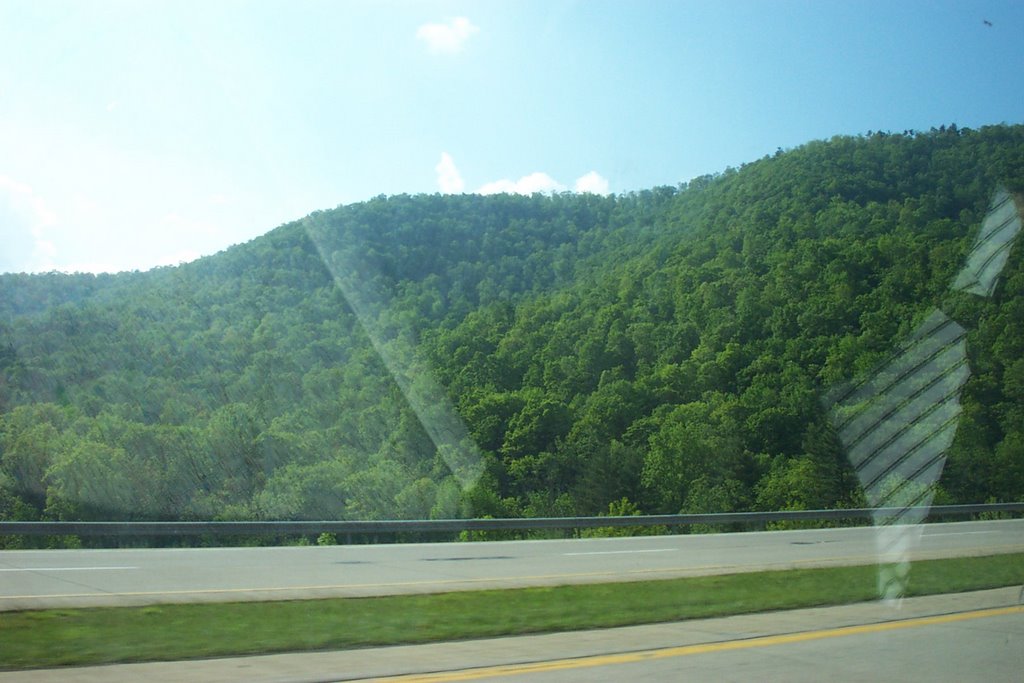
On I drove towards my destination, from the coastal plains of Virginia into the mighty Appalachain mountains. I quickly crossed from Virginia into the state of West Virginia. It appeared to be a very underpopulated region with miles upon endless miles of mountains and forests. Small isolated communities were seen every 10 miles or so. The views of this state were simply breathtaking. Perhaps before the industrial revolution, much of the planet would've been as beautiful as this. In anycase, several hundreds of miles were traversed in West Virginia. The mountains and valleys grew ever narrower and more claustrophobic. At last all I could see was the road and perhaps 20 to 30 yards on either side of the road, after that, nothing but tall overhanging peaks. At last, I reached Grundy, a town of around 1000 souls. Grundy used to be a coal-mining camp that had the good fortune of having a road built through it. Now that the era of industrialization had passed, a small town somehow spawned itself upon the tiny sliver of ground that exists alongside of the highway. At no point along the entire span of the town, did the total width of flat ground ever exceed 150 yards. And even that mere sliver of flat land was only built through the accumulated rubble of countless strip-mining operations, it was indeed a sad sight. Backed by mountains on both sides, there's a strong sense of gloom and claustrophobia surrounding the place, I was more than a little uncomfortable there. At Grundy, I visited a good friend of mine, and gave her a special delivery of Oriental Moon Cakes for the upcoming Spring and Autumn Festival.

At one point in my life, Allison was perhaps the dearest person in the entire world to me. But time, distance, and perhaps fate had conspired to make that bond all but dissapear. Allison was hospitable enough to offer me boarding at her own home, and we spent many hours that night in dialogue of days gone by. I realized that much distance had grown between us, distance not of mere space and time, and that saddens me more than a little. That night, I was plagued by strange and melancholy thoughts. If things had been just slightly different, Allison wouldn't be stuck here in this claustrophobic mountain town, I wouldn't have allowed that to happen. But if things had turned out differently, then I would never have discovered my one and only, chances are that I wouldn't even be on this side of the continent. But one cannot spend one's nights dwelling on what might have been, not when the undiscovered country of the future still holds such a promise of happiness.

Sunday, September 17, 2006

Nomadic Vacation Hiatus 9/17

Today has been one of rest and recuperation. Nomadism is a hard way of life regardless of the technology. Tomorrow, I shall take off for the smokey mountains of Tennesee on a quest to slay a full grown boar of pure Eurasian stock. But first, several significant short-comings were recognized during the two day "dry-run."

  • The collapsable hunting tent is a vital component of any hunter. It serves as 360 degree cloak to deceive large game into coming within the kill-zone of one's bow or rifle. It performs admirably as a temporary shelter and sleeping rig. On stalk hunts, the tent serves as an adequate "home base" of sorts where weapons, supplies and communication equipment can be cached. During the dry-run, my tent proved roomy enough, but the tent stakes were too short and feeble. Additionally, the seating cushion that I had proved to be very bulky during transit. This could be due to the warm weather though. The tent stakes I replaced with thick wooden dowels. The seating pad was replaced by a fabric stool.

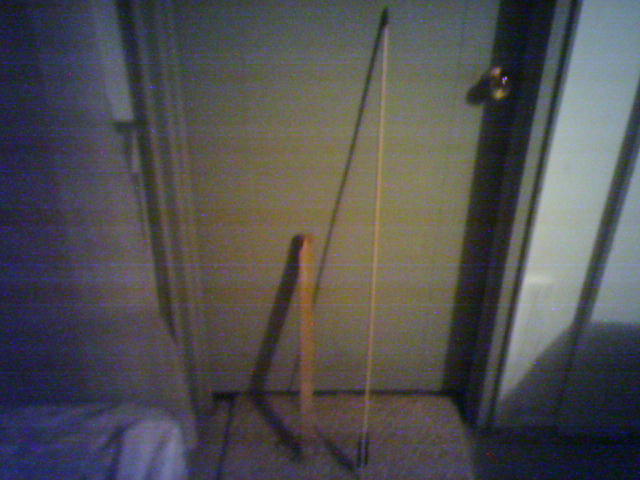
  • The longbow proved to be a clumsy weapon when traversing forrested terrain. The trees and branches complicates the process of maneuvering and fully drawing the bow for that smooth shot. Additionally, the backquiver during the stalk causes significant noise which may alert the more cautious animals to my prescence. With that in mind, I replaced the 70-inch longbow for a shorter 60-in varient that I crafted last year. This bow is weaker but the decrease in arrow speed should be more than compensated by the bow's stealthier and more flexible profile. The quiver, I padded with some cotton to reduce it's noise signature. In anycase, the shorter bow should still suffice to deliver that killing blow out to 25 yards.

  • While on the move, the experienced hunter must seek to absolutely minimize his visual, infrared, audio, and olfactory profile. My hunting camoflouge jacket, trousers, and backpack proved to be rather inadequate for the task at hand. While the camo clothing provided enough visual concealment, it was not very good at releasing heat. After 20 minutes of walking in the forest, one is left sweating profusely. That predatory scent of sweat would flag me as a threat for miles around. The sound of my bow quiver(rifle for that matter) bumping against the backpack while I'm moving is unforgivably loud. The problem cannot be easily solved via a low-tech solution, so I decided to go all the way. To solve this issue, I finally coughed up some hard currency and purchased a modern hunting vest. The vest has built in modular compartments that tightly seals necessary items such has food, water, tools, navigational/communications equipment. So in effect, a person is wearing his supplies, and this creates comparatively minimal sound. Each major compartment can be detached from the vest during transit to reduce weight if the need arises. The vest is camoflouged in the visual light spectrum and it absorbs body oders to lower the olfactory profile. An additional innovation, the vest has a perforated backside which allows some of a hunter's body heat to be dissapated into the air behind him, thus significantly lowering his frontal Infrared signature.

Nomadic Vacation 9/16


I began the day by driving some more in a northerly direction. The terrain was distinctly more mountainous and less populated. There were mile long stretches without any signs of human habitation. But then again, mountains are inherently difficult to inhabit on a permanent basis. The rains of the night before had dissapated and everything had the appearance of profound beauty. There was no hurry in my driving since I wasn't going anywhere in particular. My car passed by some state game lands. I got out and turned hunter/gatherer with the longbow. After a few hours of wandering in the woods, I chanced upon some wild slowberries which I collected, washed with some spring water and gobbled down.

A short while after that, I spotted a woodchuck just sitting there staring at the sky. I let loose one of my arrows from 35 yards away....and MISSED!!! My horribly inaccurate arrow flew into a bush a several feet away and the woodchuck fled in the opposite direction. I went back to the car and drove on.


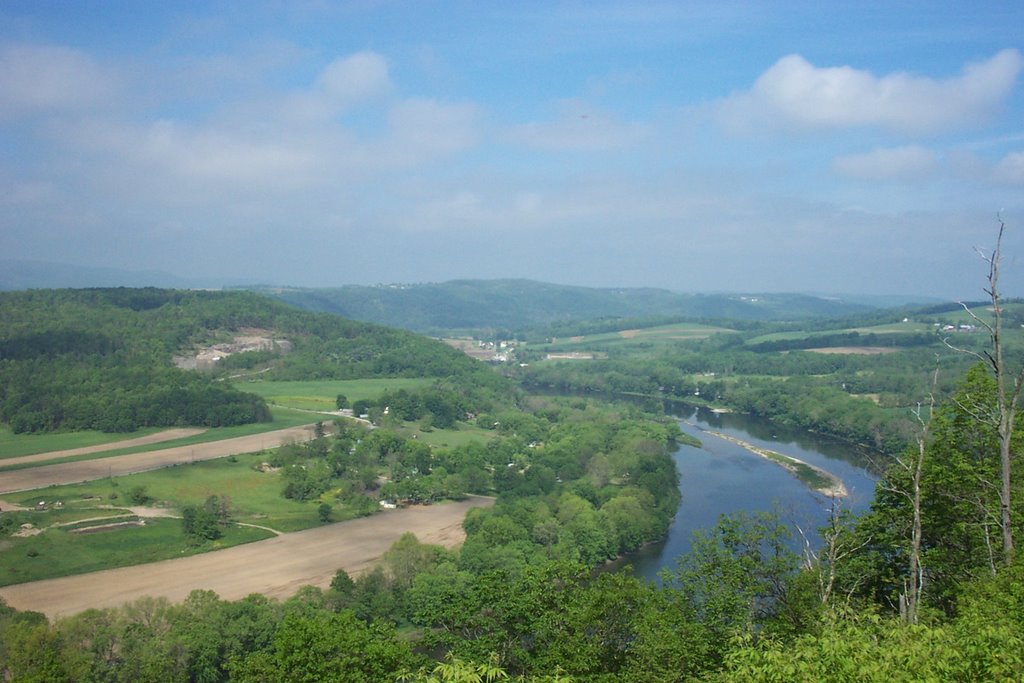
Several hours more of driving took me to a bend in the road that presented a magnificent, panoramic view of the valley below. There was a post by the road, and it mentioned that this road used to be part of an old Native American trail network. About 400 years ago, a tribe called the Huron inhabited the land that I drove upon. The Huron fought the English and French colonists who tried to subjugate them, they also fought other Indian tribes. That trail over the mountain side was part of a strategic defense over that piece of their territory. Needless to say, the stone-age Huron had no real chance against the European colonists. The French introduced diseases such as smallpox which wiped out large swathes of their population and the English gave their greatest tribal rival, the Iroquis, muskets and cannons. The Huron had nothing more than primitive bows and wooden hatchets. Huron flint and obsidian couldn't defeat European steel, and arrows were no match against gunpowder. And thus the Huron were massacred by their Iroquis enemies. All that remains of their legacy is this little road and a few dusty books in forgotten libaries.


I began heading back home around mid-day. After several hours of driving, I came upon the small town of Hamburg. Right outside the town, there was a huge Hunting Outfitter store called Cabela's. It was massive, truely gargantuan, the size of a large mall. I suppose this one store must be responsible for the bulk of the Town's employment opportunities. I went into this shrine of the Outdoors and browsed their archery section. The dismal performance of my home-made bow and arrows is an embarrassment that needs to be rectified. A very friendly old gentleman by the name Elliot was of great help in that Store. We spent an hour chatting about the primitive bows of North America and that of traditional wooden arrow construction. Elliot was formerly a machinist at an industrial plant near Reading. After the Industrial Revolution passed the region by, the only employment he could find was to become an arrowsmith at Cabela's. Making a long story short, I ended up buying half a dozen razor sharp carbon steel arrowheads that perfectly matched with my quiver of wooden arrows.

The rest of my journey was fairly uneventful. I reached home late saturday night along Route 61 South.

Nomadic Vacation 9/15

My car meandered northwest-ward without any particular drive or purpose. There was no need to rush or follow directions. There were no pressure to take this road versus that. I simply went where fate took me. And there was a lot to see on the way. Our state used to be at the heart of the North American Industrial revolution. Only 2 generations ago, the land over which I travelled produced a quarter of all the steel consumed by humanity!

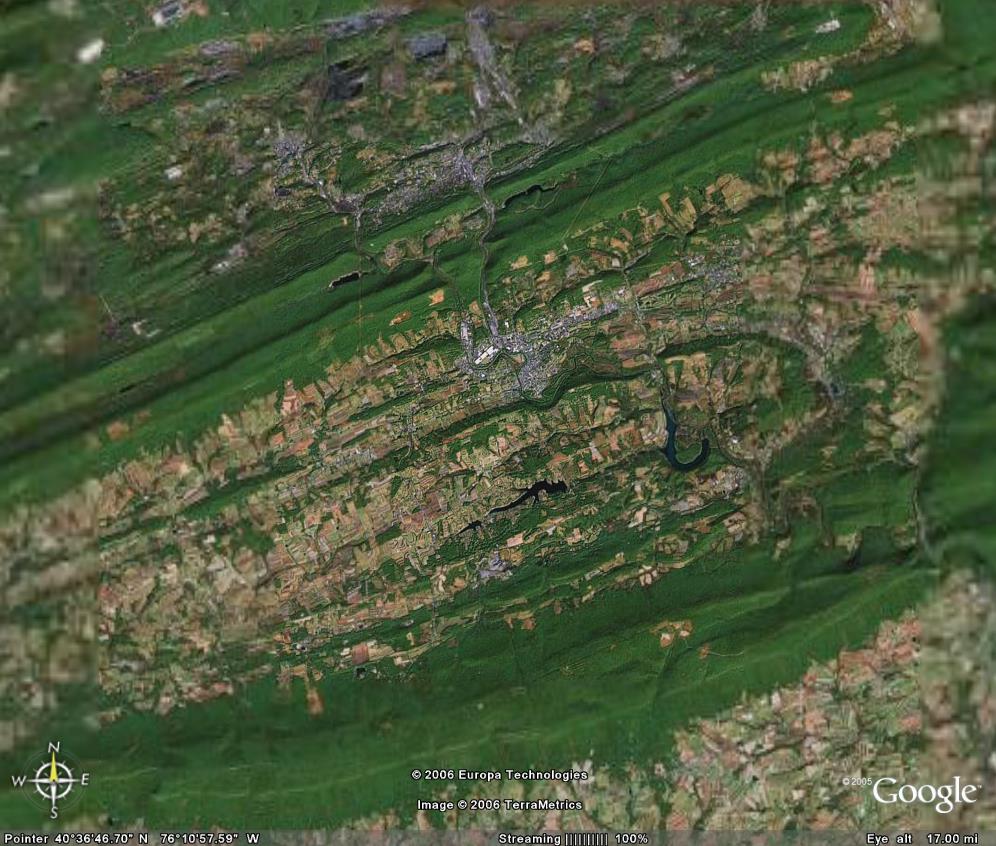
But seasons wax and wane, and few glories of that era remained. I passed many abandoned factories and mills. Derelict looking factory and rail-road towns blurred into one another due to their frequency. The all-pervasive ambiance of nature towered over the works of men now deceased. High above the abandoned buildings and grimy towns were emerald mountains and hills cloaked with mist. Such a duality of beauty and ugliness was a sight to behold. At some point, I passed through the city of Reading, and lost track of where I was going. The terrain became kind of mountainous with a smattering of isolated farms and villages. The strange thing was that I didn't care the least bit about being lost.


After several more hours of aimless driving, I happened to chance upon a small village called Friedensburg. There alongside of a rather empty and non-descript road, under a drizzling sky, was a kiosk manned by a young woman. The stand read "fresh Organic Produce", so I decided to stop and buy a few ears of corn. The price of the corn was dubiously cheap, and I suspected fraud. So I asked the girl, Andrea was her name, as to the source of her produce. Apparently, Andrea didn't quite know the difference between organically produced versus mass-produced corn, since she was just selling some corn for her uncle. For some odd reason that conversation went on for much longer than I thought. Maybe it was the fact that we were the only two people along an empty road in the middle of nowhere with nothing better to do. Maybe it was just the corn.

The girl was rather lithe and very easy on the eyes. She looked to be in her early twenties, a brunette with big brown eyes, though I obviously didn't ask her age. Apparently Andrea never went to college and her family were mostly farmers or retired steel workers. Apparently, selling corn in the middle of nowhere is one of Andrea's 3 jobs. For some reason, I had the nerve to ask her what her future plans where. And her reply was to be a DJ in NYC. What an odd and out of place dream for someone who is probably my age, I thought then and there. But this Oriental have enough common sense to remain silent and let the girl continue her story. Andrea was obviously in love with a man from this place called Pottsville. He was studying at some sort of a trade school to fix cars in that "city." The standard story was then told. As soon as he was done with his learning, he was going to marry this girl and they'll live happily ever after. At least that's what she blurted out to me. I was foolish enough to ask when the ceremony was planned. The girl seemed uncertain, even fearful and replied that she didn't know. I don't know what was promised to her, but she sure seemed hopeful. I bought my corn, thanked her for the company, and left.


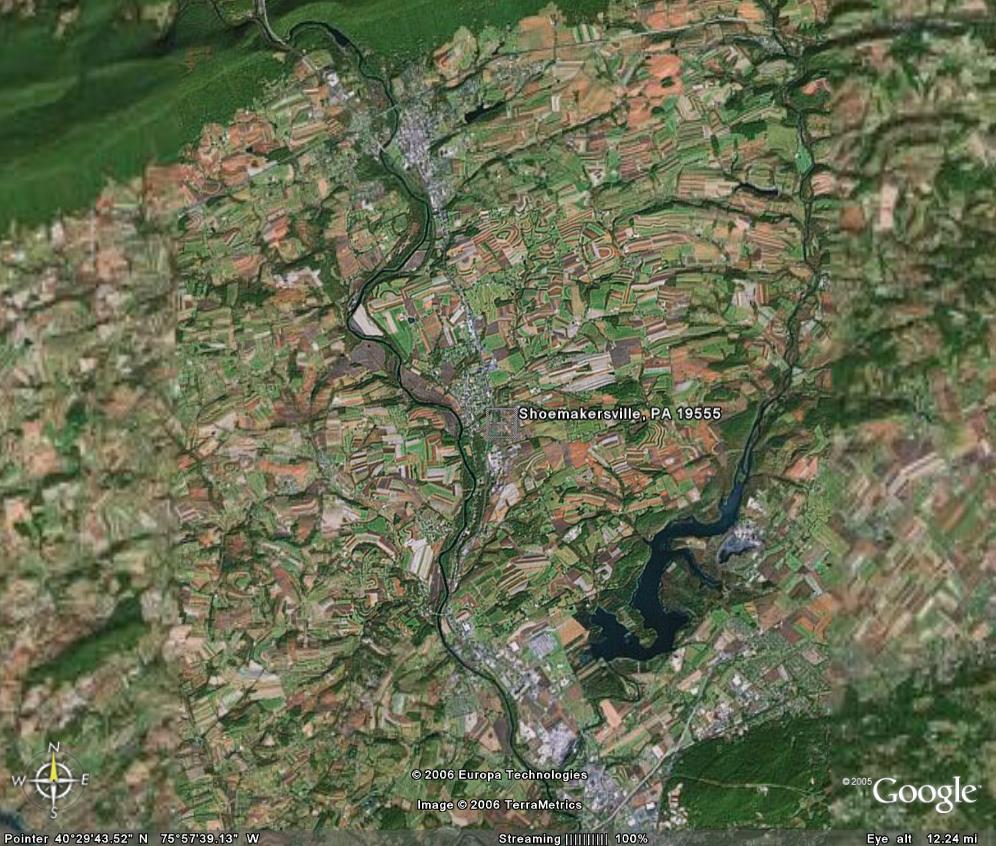
That night, after hours more of wandering, I rented a motel room at another tiny, non-descript village called Shoemakersville. Late at night, lying in bed, thoughts raced through my mind. Is this what love is like? Or is it just a desparately lonely country girl trying to tell her story to someone, anyone, who would take a moment to listen? In a person's life, there must be that special someone, that immortal figure, the one and only. Andrea believes that her one and only will marry her one golden day, such a simple and sweet ending. I wonder if my feelings for that special someone would ever be requited, but by the gods, how much I do want to believe it as much as that simple farm girl...

Saturday, September 16, 2006

Nomadic Vacation Initial Planning

Some prefer the excitement of pre-planned, pre-packaged adventures in "exotic", far-away lands, while others content themselves within an environment of profound luxery and opulence. Neither options would suffice to quench that hunger of the spirit, that thirst of the soul. I'm referring to the wander-lust which inflicts the hearts of the young. The desire to explore the undiscovered country so hard to reach( or so easily overlooked ) by others burns strongly within me. And for two and a half weeks out of the year, one can actually follow that desire.

I wanted to go off the beaten path, to take the roads less travelled. There are hundreds of small villages and towns tucked-away in the mountains and backroads of this nation. Within these little communities are lives and adventures worth exploring. I have 16 days on my hands, so an initial short-ranged roam around my home state of Pennsylvania was in order. This journey will flush out any inadequacies in planning and/or equipment related to long range wandering. I intended this trip to be an abridged version of the ten day long road trip across the Eastern U.S that will begin first thing monday.

Thus, with such plans in mind, I gathered a plethora of supplies for the journey. The material possessions that I took were simple, like that of most nomads. For defense and hunting, I brought along the rifle/longbow/knife triage. A collapsable hunting-blind came in handy for a makeshift shelter of sorts. For communications, I brought along my trusty consulting laptop and PDA phone. A miniature kerosene heater for cooking was carried along. For sustenance, I took the remaining 3lbs of acorn meal, some chocolate, and a few gallons of spring water.

With those supplies in the trunk of the Honda Civic, I was off.

Saturday, September 02, 2006

Weather Warrior II


Now that summer has passed the weather has turned ugly yet once again. The cold resistent kale and turnips that I planted last week have already sprouted out of the good earth. The problem seems to be that after a recent thunderstorm, these tender turnip and kale plants are being attacked by viscious hordes of slugs. I've yet to devise biological means of defense against these creatures, so for the time being, slug-slaying has become a weekend chore for me.

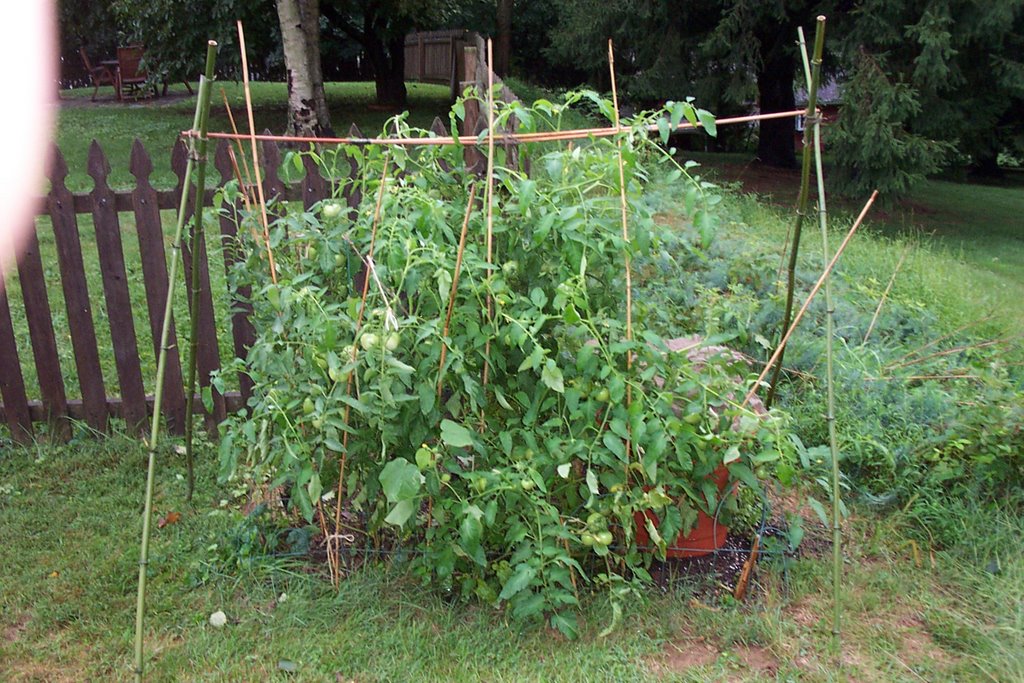
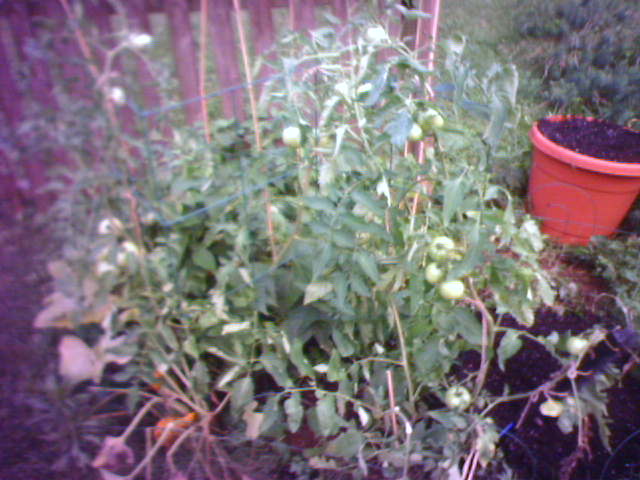
The two tomato trees are unfortunately being affected by the cold and damp weather. Here in the north east, september night- time temperatures can dip below 60 degrees, and all it takes is one light frost to kill my tomatos.

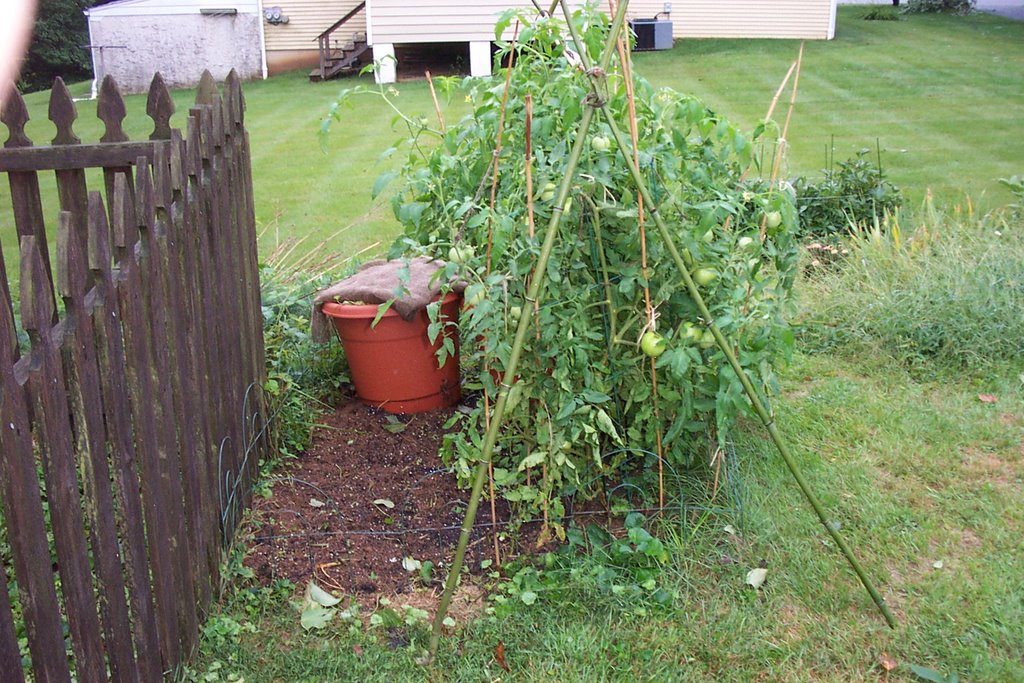
There are some 50 tomatos growing on the vine and it would be a shame to lose them to bad weather. After consulting the handy Cold Climate gardening manual, a few strategies were devised to counter this threat. Firstly I put up a lean-to structure of bamboo lashed with hemp ropes over the two tomato plants. A rough hemp fabric is draped over the structure during stormy and/or windy days to protect the fruits.


On clear days, the hemp blankets are piled on top of the compost bins. Effectively, the hemp blankets holds in the heat generated by the rotting compost and releases that heat slowly over the night. Since the bins are located immediately behind the tomato plants, the air around these plants are raised by several degrees during the night. I'm hoping that these measures will prolong the time of the tomato plants by several weeks, just enough for all of the green tomatos to ripen on the vine.

Saturday, August 26, 2006

Garden Update and Imports from East Asia


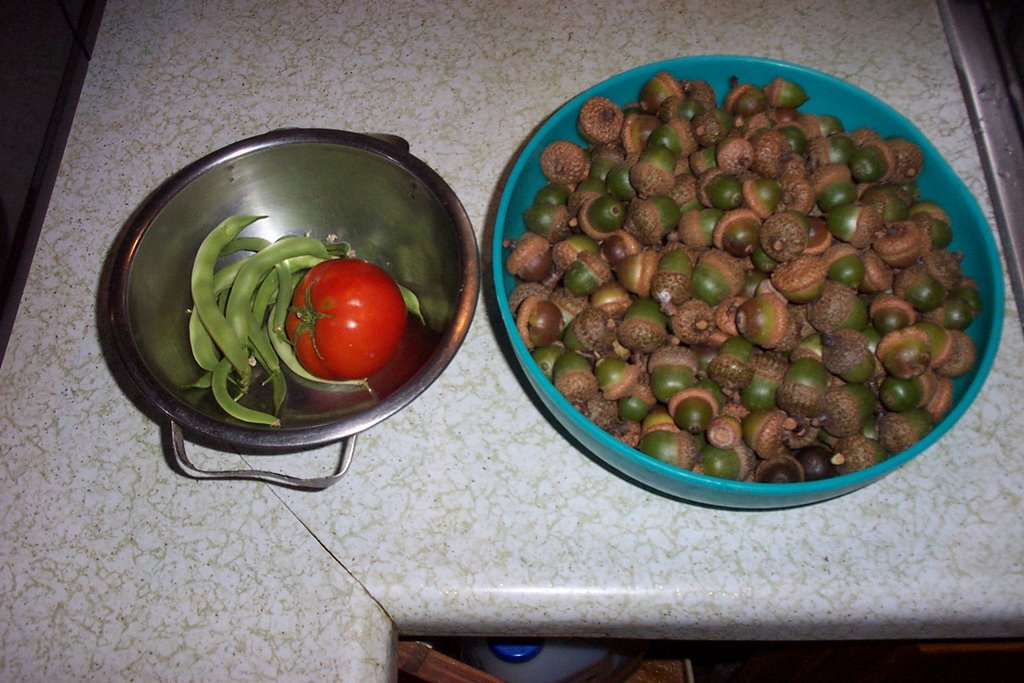
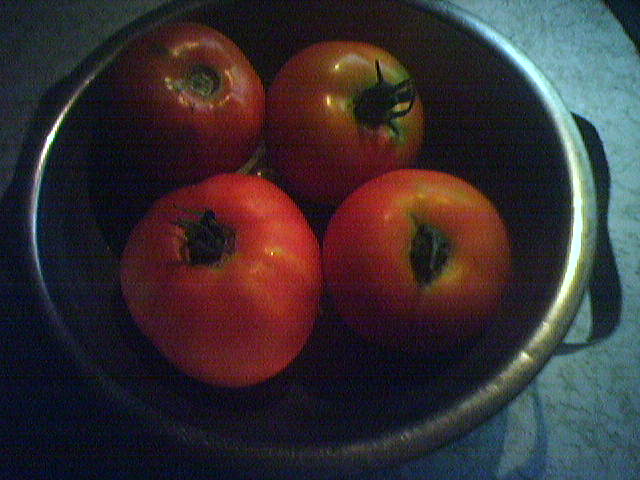
My tomato plants have apparently reached a state of full maturity. Right now there are over 50 tomatos growing on the vine. Additionally, the biggest harvested tomatos are far larger than average, each about a pound in weight.

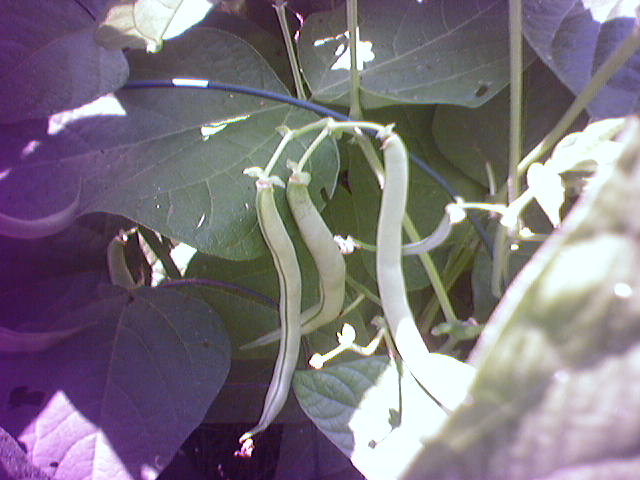
The String bean plants have yielded their last bit of harvest. The plants themselves were cut down and added to the compost pile. I intentionally left the roots in place because these roots fix nitrogen from the atmosphere into the soil thus making the soil more fertile than before the beans were planted. A week from now the exposed patch of soil will be planted with Kale. This is a cold resistant variety of the cabbage family, and it shall hopefully provide some sustenance during the winter.


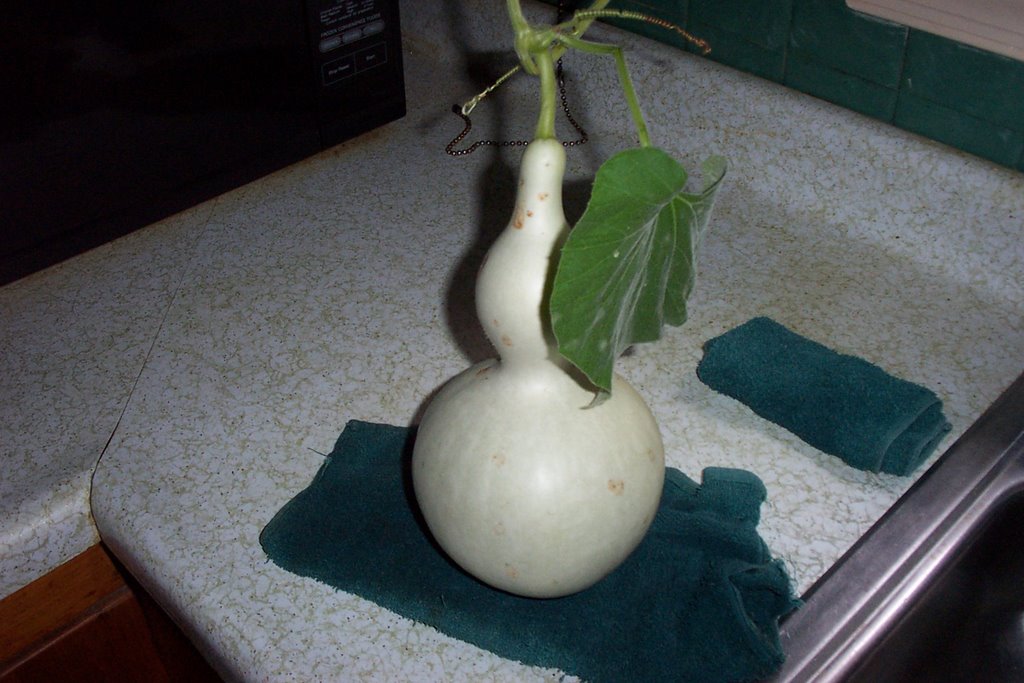
During a trip to a neighbor's organic garden, I managed to barter a very unique item, a Chinese Calabash of good stock. The calabash is one of the oldest domesticated plants in the world. It serves the dual purposes of food and container. In this case, I traded 1/2 of all my heirloom squash seeds for 1 single Mature Calabash of around 15 pounds. This plant is very uncommon in the U.S and my neighbor only managed to obtain it from seeds that were passed to him 2 years ago by yet another friend. Apparently, Americans haven't yet developed an appetite for the calabash, nor has the North American environment produced enough pests to attack this plant in earnest. The calabash plants were growing like weeds within my neighbor's garden with no signs of disease or natural predation. As such, Calabash plants may be very easy to grow here in the North East. Needless to say, I shall proceed to consume this calabash and save it's seeds for full scale production next year.

Saturday, August 19, 2006

A glut of tomatos


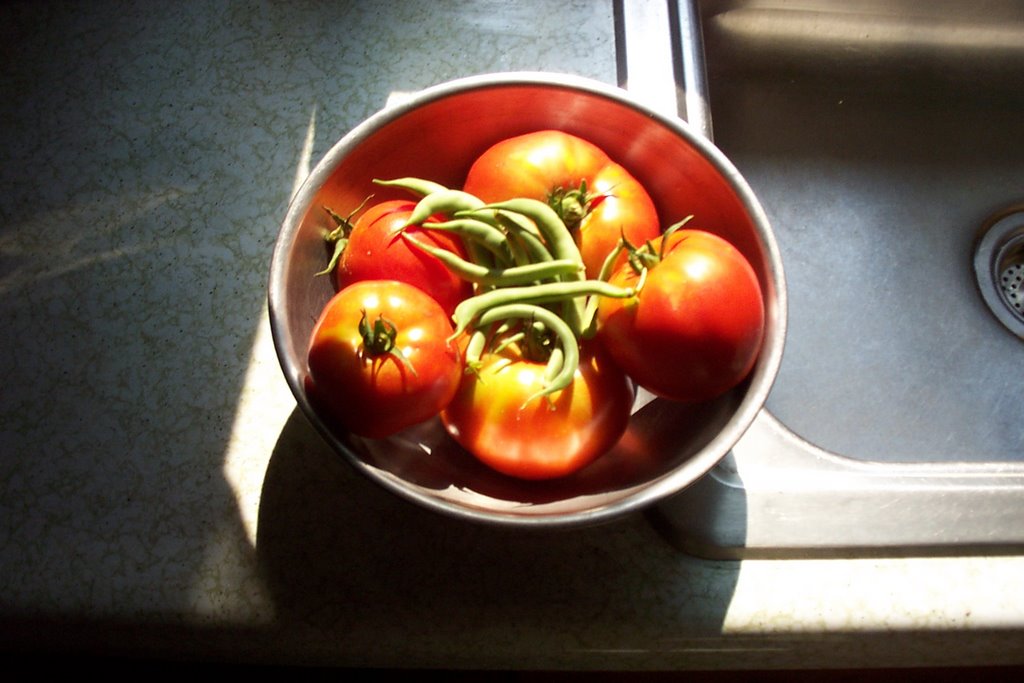
I've gathered yet more ripe tomatos from the Garden today. There seems to be a never-ending supply of them. However, I've also noticed small tomato bugs attacking the leaves of my plants. Clearly the tomatos have reached the peak of their productivity and a gradual weakening of vigour can be expected in the coming weeks. The String Bean plants are looking rather worn out right now, and this they should be. After delivering six batches of their wonderful beans, it won't be too many days before these plants return to the happy compost heap from which they came. Thus the old and dying are recycled into the new. Speaking of the compost bins, the earth worms have clearly done their work. After 3 weeks of composting the huge heap of vegetation has shrunk considerably. The two bins now contain a combined 160 lbs of decaying organic matter, enough to fertilize an area 5 times the current size of my garden next year.


I've noticed that food plants in their natural conditions face tremendous challenges just to survive. They need to extract every last bit of resources from the soil to support their growth. They are greatly affected by changing weather and availability of water. During youth, they are attacked by a host of pests and diseases, during old age, yet another plague of pests and parasites work to shorten their days. Yet the wonder of it all is that the produce of these unmodified heirloom plants taste so much better than any mass produced variety of the same type.

Could it be that the tomatos, beans, and potato plants that survives the ordeals of their natural environment to reproduce simply has better tasting offspring? This question can be conversely applied. 70% of all tomatos currently consumed in the U.S are Genetically modified. Almost all of these tomatos include the insertion of a certain gene from a deep sea eel. Why are there eel genes in tomatos one may inquire? Well, the eel gene prolongs the life and appearance of the tomato fruit by 8 fold. That is, a normal tomato that is allowed to ripen on the vine, will shrivel up and rot within 1 week, a genetically-modified tomato of this type will stay as fresh and beautiful looking as the day it was picked off the vine for 2 months. Yet there is one defect, they just don't taste very good and couldn't be made to taste any better after a decade of additional genetic tinkering. For some odd reason, gmed tomatos of this kind lost the intrinsic freshness and tartness that real ripe tomatos have during it's brief days of youth and beauty. But people simply bought what looked good and wholesome, and the eel-derived tomato is now on everyone's dinner table. Some food for thought...

Monday, August 14, 2006

Gathering Acorns


While fishing and gardening has provided a large amount of consumables, I decided to give the arts of gathering and herblore a try. Seeing that I have the day off from work, the normal "munday" tasks have been replaced by activities that induces some small degree of sanity. I went into the woods to gather some acorns and mushrooms. Unfortunately there hasn't been rain in almost two weeks here in the northeast and thus no edible fungus was to be found. On the flip side, I did manage to collect some 25 lbs of ripe acorns. Acorns, the seeds of oak trees, are rich in carbohydrates. However, the catch is two fold:

1. You would have to compete with squirrils and other wily rodents to get your share of the crop. To my chagrin, this turned out to be no easy task. 2 out of 3 acorns that I found have been thoroughly gnawed by these frisky devils.

2. Each acorn contain trace amounts of tannin which is extremely bitter and has to be leached out of the meat of the acorn.

The native american tribes of the North East used to consume large amounts of acorn meal. They would first remove the acorn shells and collect the meat. The meat would then be pounded into meal. The meal is wrapped tightly into a semi-porous sack and left for a day under a cold flowing stream. The stream water carries away the tannin and leaves the acorn meal ready for human consumption. I'm going to try a much faster approach. A few pounds of the collected acorn will be shelled and mashed. This mash will be boiled in water until the water turns yellow, then the water is drained and fresh water poured in for more boiling. This boiling will quickly leach out the tannin.

So I took 3 lbs of acorns and shelled them with a nut cracker. About 10% of them were rotten/discoloured/worm-infested. The acorn meat was then pounded in a metal bowl until it turned into a fine pasty meal. This paste was then boiled repeatedly with tap water.

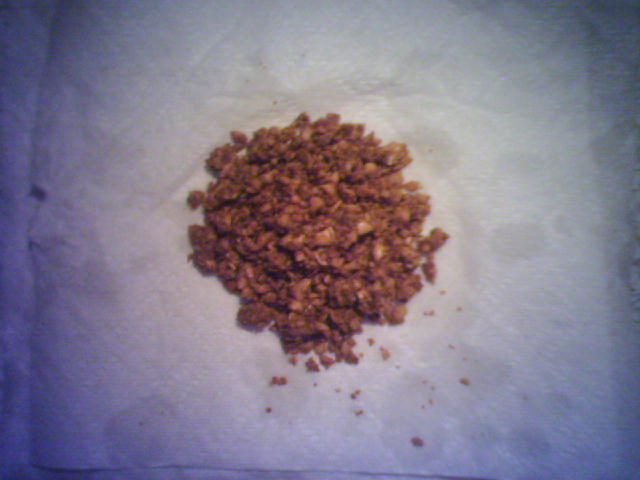
After each boiling the water was drained off and the acorn meal quenched with clean water. The run-off water was of this cloudy yellow-orange colour. After the second boiling I tasted a morsel of the acorn meal, it had a very bitter after-taste. So I boiled it some more. After the 4th boiling, the water became somewhat less yellowish and more clear. After the fifth boiling the water was entirely clear. I then drained all the water and pressed the excess water from the meal. The processed acorn meal was left to dry overnight on some paper towels. When considering the potential of acorn meal as a food source, I do not have the greatest of confidence. 3lbs of acorns and 2 hours of work produced less than 1/3 of a pound of acorn meal. And I know the caloric value of this meal couldn't possibly be greater than 1/3 pound of flour or even millet. Moreover, the taste of this acorn meal is bland and very coarse, kind of like flat, unflavored, canary seed.

Sunday, August 13, 2006

Morning and Evening fishing trips


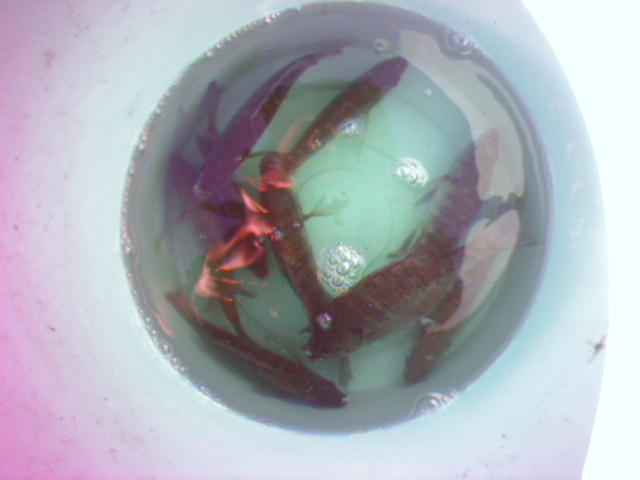
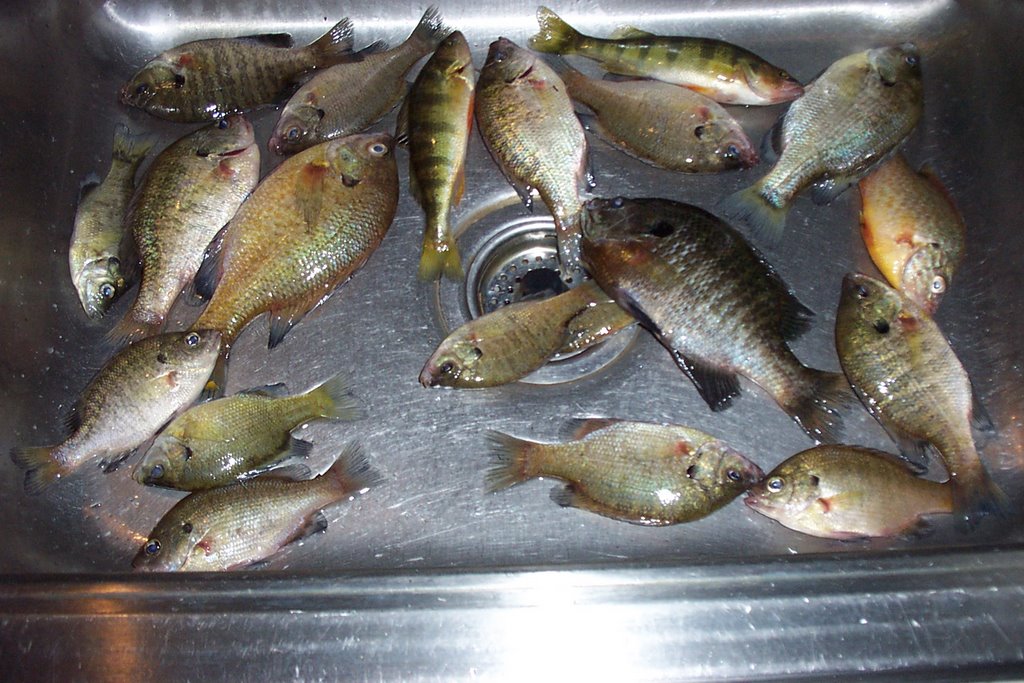
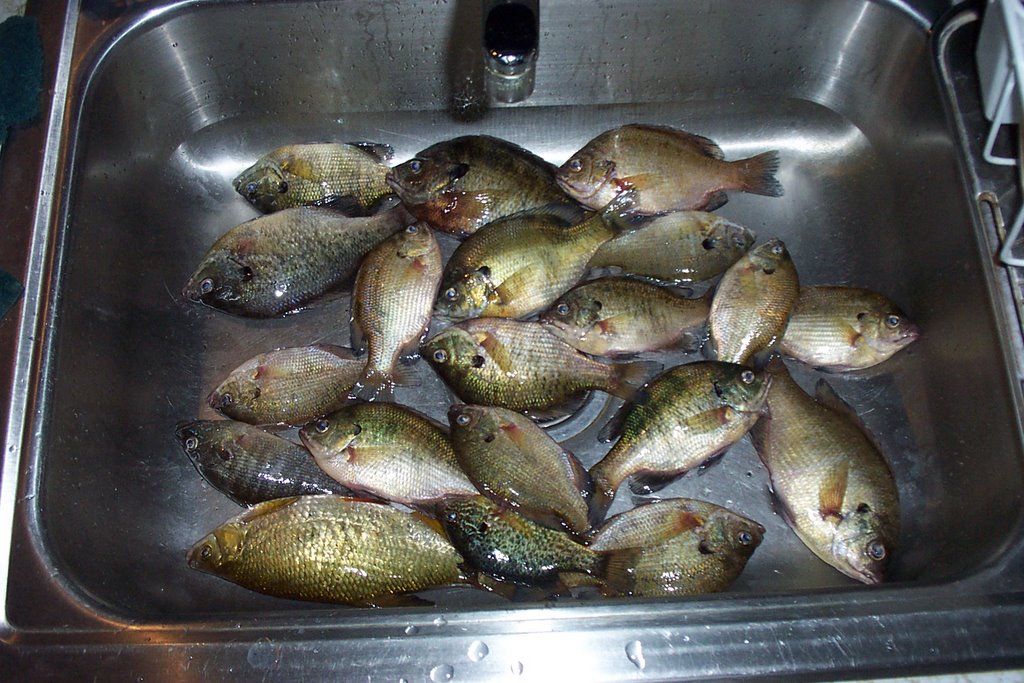
This morning was quite cold for august. The scene by the lake was of the utmost beauty. There was a light mist hovering just a few feet above the surface of the water. The effects of the sunrise upon that mist was a memorable scene. 9 panfish of various sorts were caught within an hour.


Around 6:30pm we went back to that lake and fished for another hour. The fishing was better than in the morning. 17 panfish of various breeds were caught along with 2 perch. All in all, we harvested 10 lbs of fish today.

Saturday, August 12, 2006

Tomatoes and more tomatoes


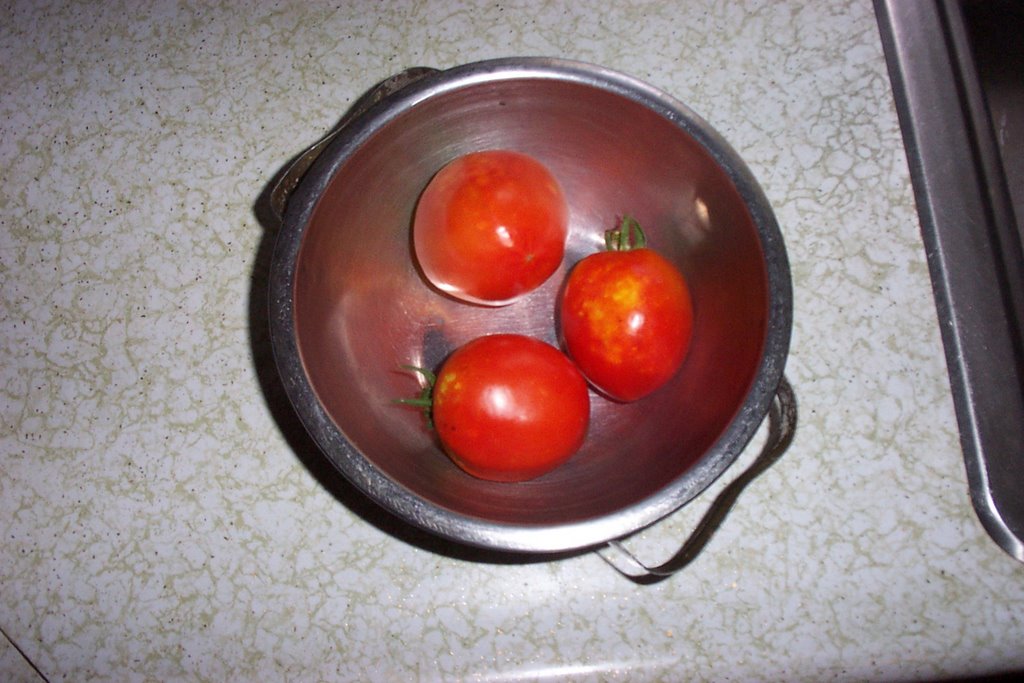
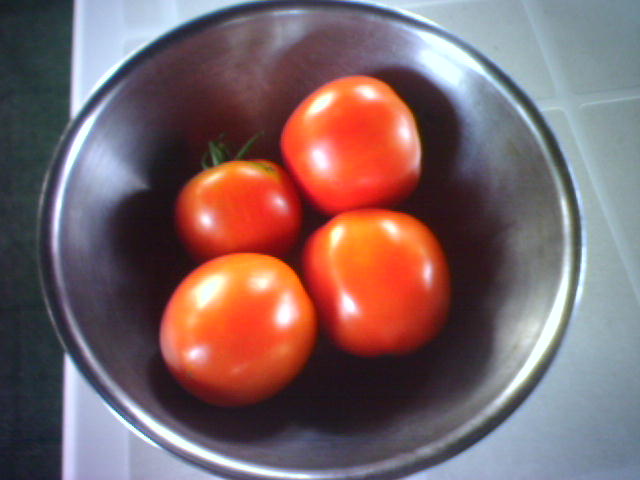
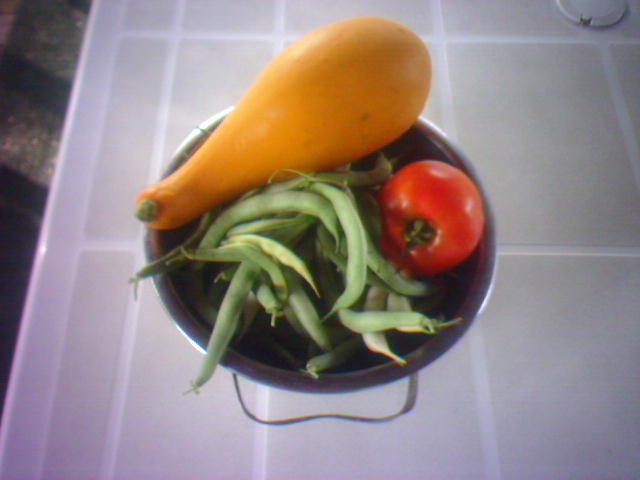
My garden has been producing tomatoes like there's no tomorrow. There are now some 30 tomatoes on the vine and maybe a dozen ripe ones have been picked.
Sunday, August 06, 2006

Solar Powered floodlight


I replaced our 60 Watt-hour driveway light with a 15 Watt-hour solar-powered LED flood light. Solar energy is free and causes no pollution(at least not on earth). Alternative energy sources such as solar/hydro/wind/biomass are here, but none of them could compete cost-wise with the burning of coal/oil/natural gas. The current paradigm of using fossil fuels for power is trifling with our progeny's inheritence.

Instead of powering up new gizmos and luxery items, we should be using technology to reduce per-capita energy consumption and still maintain a decent standard of living. The issue is obviously one of magnitude. I fully realize that my flight to Miami and back last month consumed more energy than a real hunter-gatherer would in his entire lifetime. But it's still a sensible thing to try to curb some of our excess consumption. Moreover, true individualists would want to have a hand in his own energy production. Thus my trials with biomass (green compost) and solar power generation may do some good after all.

In anycase, this is a small, 15 watt step towards becoming self-sufficient.

Saturday, August 05, 2006

More food from garden and rod.


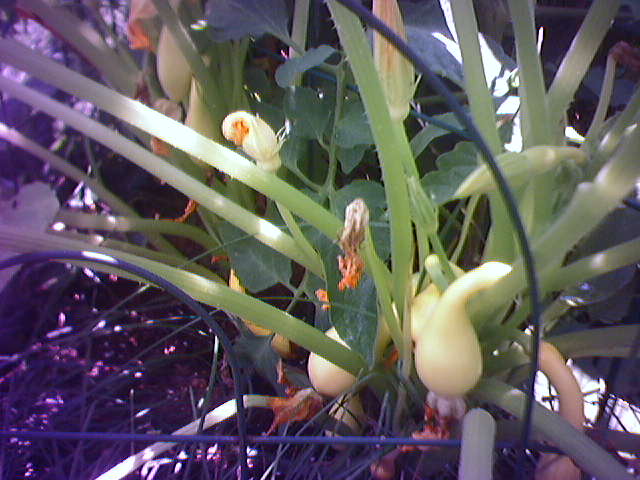
There are now some 20 tomatoes hanging on the vine. The String beans are still holding strong. The Squash plants have yielded their last fruit and have by now gone to the happy compost heap!

On the fishing front, we netted another 10 lbs of fish today.


16 Panfish of various sorts. My plan is to acquire 60lbs of fish before the season is over.

Sunday, July 30, 2006

Fishing on sunday


Sunday evening was spent fishing with my father and cousin. As always, capturing fish is a fun filled family event. My catch was quite respectable for a 3 hour haul:

7 Black Crappies
5 White Crappies
3 Blue Gills
2 Sunfish
1 Green Sunfish
1 Pumpkinseed
1 Yellow Perch

For a total of 12 pounds of fish. I'm anticipating a total catch of 60 lbs for this year, we'll see if I can get there.

Friday, July 28, 2006

Composting Time


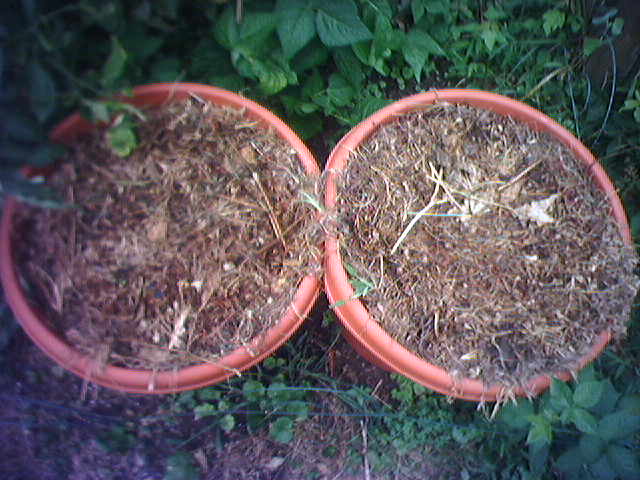
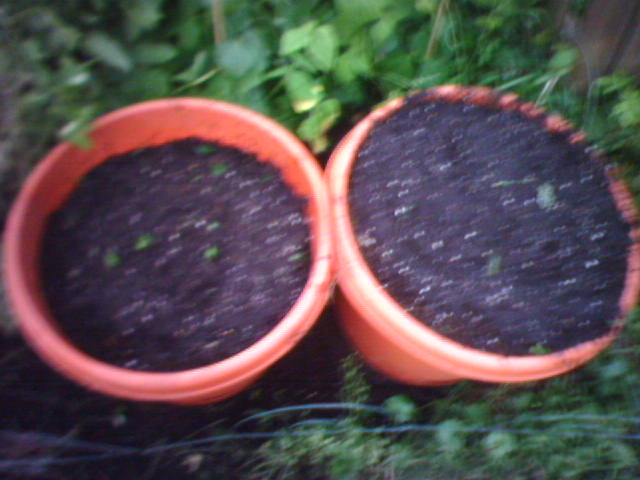
I've harvested the last batch of potatoes and several of the ripe tomatoes. The final count is 20 pounds of potatoes harvested from roughly half a square meter of land. With the buds harvested, the soil must be rested. Thus I used the containers for the potatoes as makeshift compost bins.


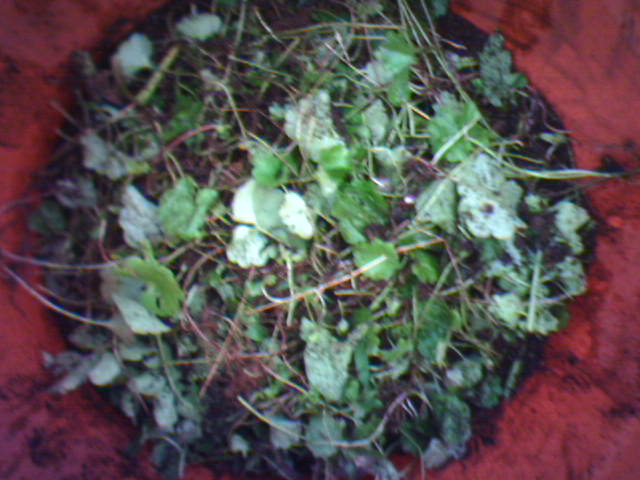
First, the bins were cleared out except for the bottom layer of rocks to serve as drainage. Then a layer of used soil 3 inches deep was packed onto the layer of rocks. The used stalks and stems of the potatoe plant was cut into small pieces and mixed with other scraps of weeds and clovers that were growing around the garden. This fresh biomass was layered on top of the used soil.


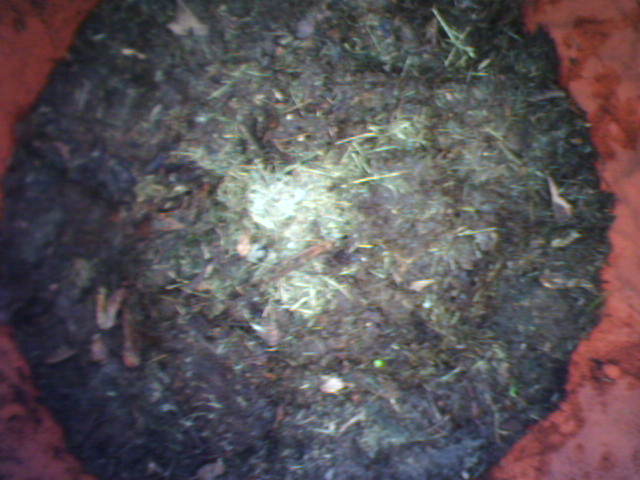
On top of this layer was packed another layer of partially decomposed grass clippings that I had packed near the edge of our backyard fence. Basically, grass clippings that are left after the lawn is mowed are usually collected in bags and thrown away by the neighbors. But this year, I collected a dozen bags of this "garbage" and packed them neatly against the side of our backyard fence beneath the hedges. Over the course of months, the layers of grass decomposed into this fine blackish/brown mass of organic material. I applied 4 inches of the decomposing grass clippings to the fresh biomass.

On top of the layer of decomposing material was applied another layer of farmed soil, another layer of fresh plant materials was applied on top of that and so on until both bins were packed to the brim. At this point I added liters of water to both bins and the rest of the work will be done by the earthworms and bacteria. Essentially, the earth worms living within the farmed soil layer will eat it's way through the fresh vegetation layer, mixing the soil and it's own excrement through the motions of it's own body. Thus, living between the 2 layers, the earth worms will eventually convert all the fresh vegetation into a mixture of soil and excrement. From the other side, the decomposing layer contains millions of anerobic bacteria that breaks down the rotting vegetation into a mixture of nitrates, phosphates, and methane. As the bacteria eats it's way through the decomposing layer, it'll encouter the churned-up soil/excrement mixture created by the earth worms, the bacterial will actuall process the excrement of the fresh vegetation far more quickly than if there only vegetation with no earthworks. Through this process, the nutrients of the dead vegetation is quickly released into the farmed out soil and mixed thoroughly by the worms. The methane released heats up the entire bin and kills off many species of harmful parasites living within the soil. Within 6 months, the 2 bins will generate over 80 lbs of high-quality compost soil that will serves as efficient organic fertilizers, just in time for next years gardening activities.


In this manner, the 20lbs of biomass that is taken out of the soil as potatoes is put back into the soil as 20 lbs of decomposing grass, and freshly killed weeds. Nothing is wasted, everything is recycled. Effectively, there is no concept of garbage within this closed system. Contrasting this with our modern system of food production and waste disposal, a great disparity can be seen. We're coverting our finite supply of oil and natural gas into synthetic fertilizers and then into food. We consume that food and the organic "waste" that we produce are flushed into rivers where it eventually ends up flowing into the ocean. While doing all of this, we're using the same finite supply fossil fuels to make pesticides which simply kills everything in the soil and leaves it a bare growing medium which is unable to sustain natural means of food production.

Sunday, July 23, 2006

Lots of potatoes and Squash


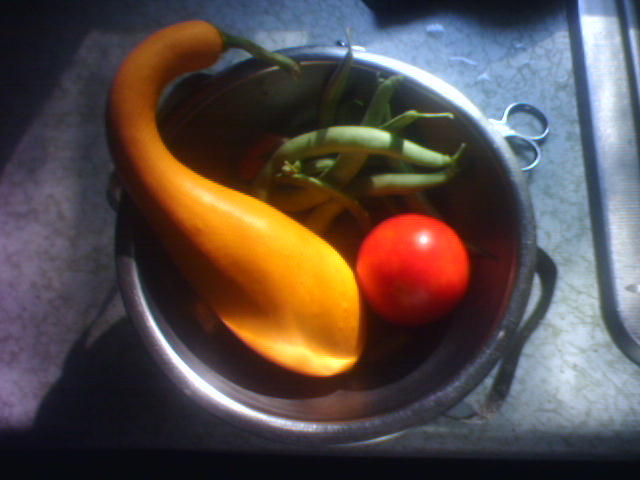
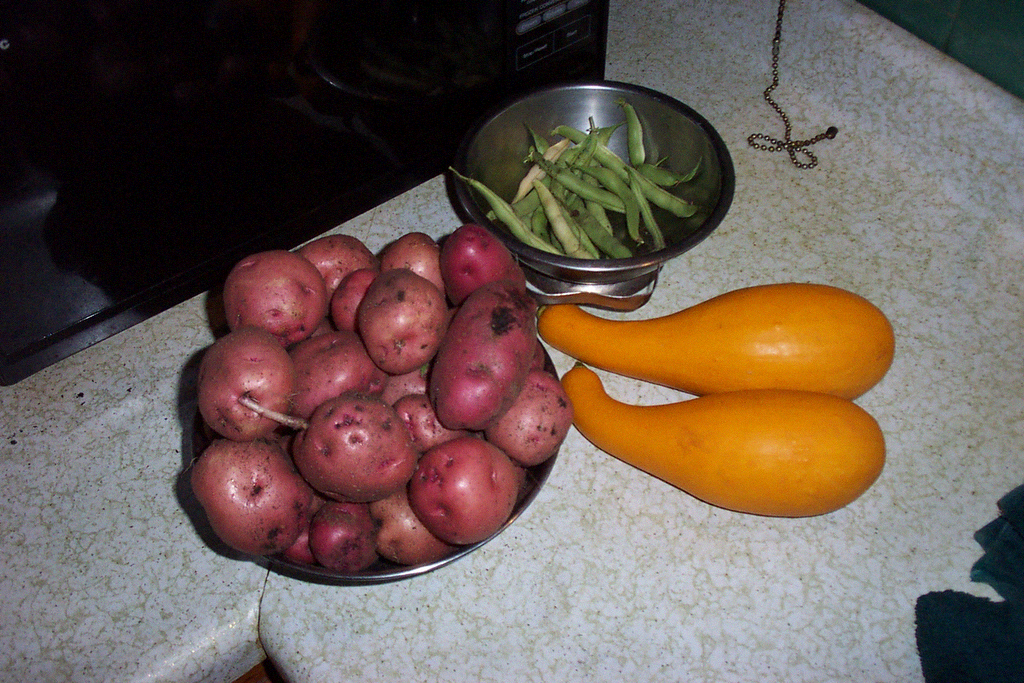
The early potatoes and squash plants are in. I harvested about 15 lbs of early taters and 2 full sized squashes. There are 6 more squash plants that are growing, and 1 late blooming potatoe still to go.

Sunday, July 09, 2006

Saw a doe!


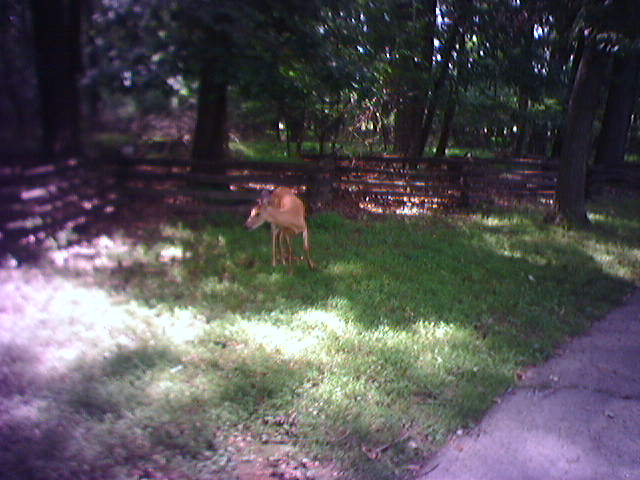
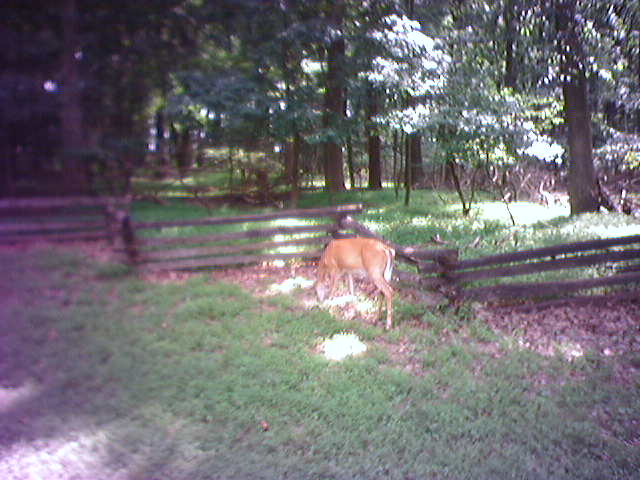
On a hike this sunday, I saw a lovely young doe. She was no more than 10 feet away and very docile. I can't wait for hunting season to begin!!!

Monday, July 03, 2006

Everything is blooming!!!


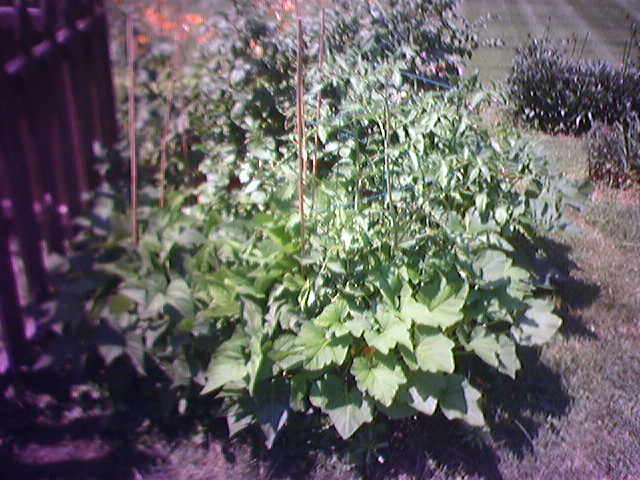
My miniature garden is apparently producing like there's no tomorrow. Every vegetable that I've planted is now bearing fruit. The tiny garden is producing at this point about 2 dinners worth of vegetables per week for a family of 3. For a single person, that's about enough vegetables to last one week, every week for the entire summer. Thus, if the current garden is expanded by a factor of 4, and the proper canning and food preservation capabilities are available, then it would be possible to provide an entire year worth of vegetables for one person on only 9 square meters of soil. Potentially, every backyard east of the Mississipi is capable of providing an entire family with vegetables, thus freeing up huge amounts of arable cropland for the extensive cultivation of grains.
Sunday, July 02, 2006

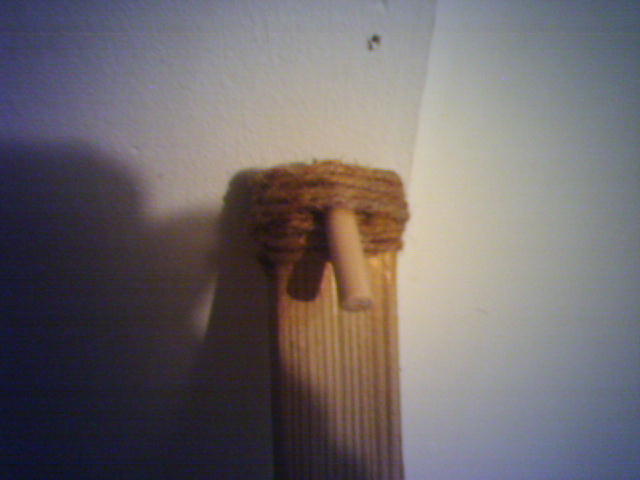
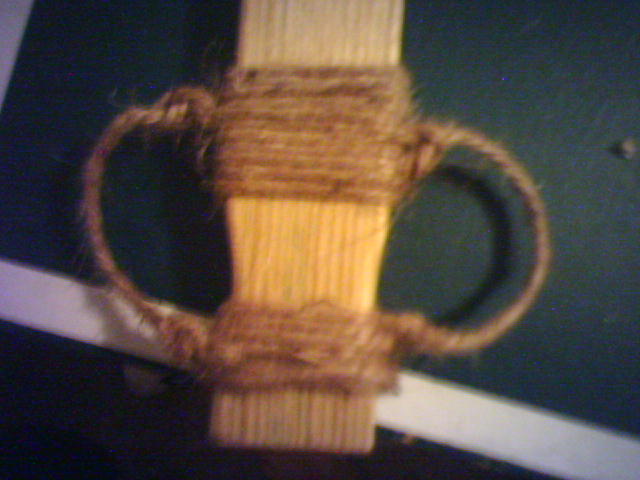
Ten Minute Spear Thrower


The Spearthrower or Atlatl was man's first missile weapon. This weekend, I crafted an atlatl of my own. Suprisingly, it took very little time and material to construct. The Atlatl is nothing more than a piece of wood with a groove on one end and 2 loops on the other. When fitted with a javelin, this tool uses the mechanical advantage of added length to translate into a rough doubling of casting range for the missile.