
Sunday, June 08, 2008
mile 60 Massapequa


mile 50 Wantagh

So I finished the pizza and was about to go on my way. I asked for the bill, and was surprised to find that the pizza was on the house. It was really good pizza made by a very decent bunch of people. As I was leaving, Charlie asked me to post this on my blog so here goes: "Buy more pizza less gas!" So seriously...if you guys are ever in Wantagh, give Merinelli's pizza a try!
mile 40 Merrick

mile 35 Between Oceanside and Baldwin

mile 30 Rockville Center

mile 28 Valley Stream

In any case, the blazing sunlight was killing me and I was forced to stop at a watermelon stand. There I met Ezra. He's a produce farmer from Georgia trying to offload some of his watermelons near NYC. The man gave me a gallon of ice water for free. After I drank my fill and loaded my water bottles, I paid him 2 dollars for a quarter of a melon, which we then shared. Ezra told me about how the high gas prices were killing small farmers across the land. He mentioned that it now costs him 1300 dollars to ship a single truckload of produce to NYC as compared to under 1000 dollars just 4 months ago. He was wondering when the government will start rationing gas...since small truck suppliers like him can't take much more of this high fuel cost. I had no answer for him. In any case, I thanked Ezra for the ice water and went on my way.
mile 25 Parson Center

mile 20 Near Jamaica Queens

mile 15 Central Queens

As I rode through Queens, I noticed that the landscape became successively more degraded the further east one rides. Williamsburg was replete with hipsters. But as I rode onwards, I noticed that entire districts seems to be in a semi-abandoned state with broken windows, collapsing roofs, and of course graffiti. Furthermore, the quality of the roads were going down. The roads here had way more pot holes and cracked pavement sections than in Manhattan.
mile 9 Williamsburg Bridge
 Riding on the Williamsburg bridge was not as impressive in person. For one thing, you're constantly surrounded by these huge metal screen walls. The screens constricted the views of both Manhattan and Queens. At the apex of the bridge, I stopped for some water and beef jerky. On the down slope, the bridge was an absolute thrill to glide cross. I was able to glide to a speed of 25 mph or so before leaving the bridge and entering queens.
mile 2 Midtown Manhattan

It was 8:30 am on Sunday Morning, I had overslept the 7am starting time. Before heading out, I had slapped on some sunblock. Riding the bicycle through mid-town was quite pleasant. There weren't too many cars on Sunday morning, and the view of the city scape was magnificent to behold.
Saturday, June 07, 2008
Long Island Bicycle Quest....Supply Gathering

It has been a long day. I have been running across the city gathering supplies for the trip tomorrow. I have mounted 2 side saddles to the hybrid bike to carry the supplies. After searching several farmer's markets and the local Chinatown, the following set of food supplies have been gathered.
1. 1 lb of concord grape raisins
2. 1 lb of beef jerky
3. 1 lb of smoked fish
4. 10 oatmeal bars
5. 10 vitamin supplement tablets
6. 10 potassium supplement tablets
As for equipment I'm bringing the following:
1. 1 Multi-purpose Swiss army knife
2. 1 Compact bike tire repair kit
3. 1 Compact First aid kit
4. 1 Bottle of Sun block
3. 1 Compact bike pump
4. 1 Liter rail mounted plastic water bottle
5. 2 Liter back mounted plastic water bottle
6. 1 LED flashlight
7. 1 miniature compass
8. 1 rain poncho
9. 1 Kryptonite U-Lock
10. 1 Smartphone+charger
11. 1 box of matches
12. Maps of Long Island
Fully loaded, I'll be hauling 25 lbs of gear on this journey. If truth be told, I'm a little bit nervous. This could be a dangerous journey. Still, it's something that I have committed myself to doing.
Friday, June 06, 2008
Long Island Bicycle Quest....Initial Planning
Every once in a while the spirit of adventure and wander-lust invades the heart of man. I'm no exception to that rule. A hunger in the soul demands a journey that will test the limits of my physical and mental endurance. This quest will not be one of ease and luxury. But rather a tough journey to explore the physical, social, and spiritual world around me. While the desire to go off the beaten path burns strongly within me, I will not be pitting myself against large tusked animals as in my earlier quests.
 For this trip, I will embark upon a solo bicycle journey to circumscribe the entirety of long island. Through the trip, I am going to explore the feasibility of long range personal transport without the use of non-renewable fossil fuels. It is my belief that such sustainable transport systems will be critical to us in this age of depleting fossil fuels and natural resources. And as such, understanding the nature of sustainable transport paradigms is a core goal of Grown UP Permaculture. Thus, relying on muscle power, fueled by locally grown organic foodstuffs, I will be attempting a 300 mile journey from the heart of New York City to the Eastern shores of Montauk and back in 4 days. I will be riding through urban boroughs, suburban districts, farms, gated communities, shoreline towns, forested state parks, and rugged hillsides. My hope is to stop at the small towns and communities dotting long island and gain an understanding of people's grassroots responses to the global food, energy, and environmental crisis that is hitting our society.
 A solitary bike journey of such distance requires a meticulous degree of planning and preparation. Going by muscle power alone, even a minor accident could have very serious consequences. Thus I'm leaving little to chance by factoring in a high margin of safety. Firstly, I have replaced my used mountain bike with a new hybrid road/mountain bike. The old bike has served me well, however, I fear that it's braking system and gear train will not survive such a long distance journey without a major failure. Furthermore, the bicycle's sub-optimal height and off-road wheels served as a huge drag on performance. The less than ideal height causes user fatigue, while the wheels reduced the cruising speed. The new bike will enable a comfortable cruising speed of 20 miles per hour.
 I'm integrating the idea of redundancy into every level of my preparations. I have enhanced the vehicle's reflector plates with mounted back-up LED lights for night time riding. If those lights fail, there is a portable LED flashlight that I can mount onto the bike. For the bicycle itself, I have assembled a compact repair kit in case of minor failures. For navigation, I'm relying on GPS feeds and streaming Google Earth Satellite maps from my smartphone. But in case this fails, I have backup paper road maps and a compass. In case of minor accidents, a compact first aid kit will suffice. In case of serious accidents, I have cached pre-recorded voice and text distress messages and added them to a list of emergency phone numbers and email addresses in my smartphone. If worse comes to worse, I can notify half a dozen emergency contacts of my situation with the touch of a button or a single voice command. Lastly, I'm taking along a multi-purpose swiss-army knife. It has been by my side on a every major adventure that I have gone on.
 I have planned my bike route in such a way that at no point would I ever be more than 7 miles away from a town and it's train station. I will be hugging the coast of Long Island for the entire journey. The terrain will be relatively flat along the coast lines. Nevertheless, I have acquired a bicycle train pass from the Long Island Rail System, just in case my body fails due to fatigue at some point. In any case, tomorrow, I will be gathering local food stuffs and additional supplies for the trip. So stay tuned!!! :D
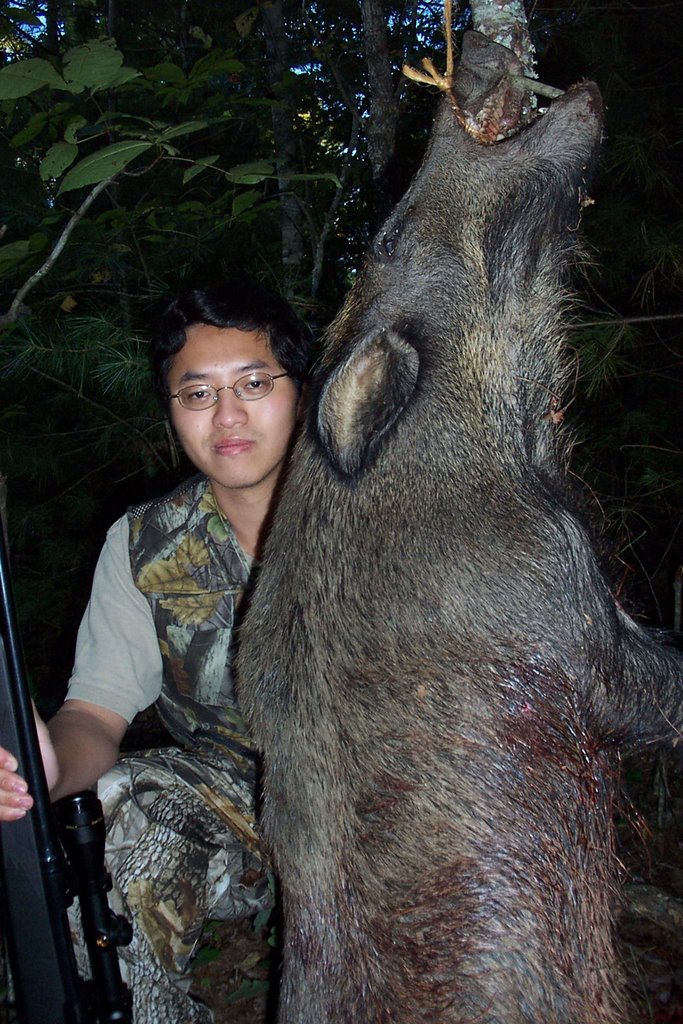
 For this trip, I will embark upon a solo bicycle journey to circumscribe the entirety of long island. Through the trip, I am going to explore the feasibility of long range personal transport without the use of non-renewable fossil fuels. It is my belief that such sustainable transport systems will be critical to us in this age of depleting fossil fuels and natural resources. And as such, understanding the nature of sustainable transport paradigms is a core goal of Grown UP Permaculture. Thus, relying on muscle power, fueled by locally grown organic foodstuffs, I will be attempting a 300 mile journey from the heart of New York City to the Eastern shores of Montauk and back in 4 days. I will be riding through urban boroughs, suburban districts, farms, gated communities, shoreline towns, forested state parks, and rugged hillsides. My hope is to stop at the small towns and communities dotting long island and gain an understanding of people's grassroots responses to the global food, energy, and environmental crisis that is hitting our society.
 A solitary bike journey of such distance requires a meticulous degree of planning and preparation. Going by muscle power alone, even a minor accident could have very serious consequences. Thus I'm leaving little to chance by factoring in a high margin of safety. Firstly, I have replaced my used mountain bike with a new hybrid road/mountain bike. The old bike has served me well, however, I fear that it's braking system and gear train will not survive such a long distance journey without a major failure. Furthermore, the bicycle's sub-optimal height and off-road wheels served as a huge drag on performance. The less than ideal height causes user fatigue, while the wheels reduced the cruising speed. The new bike will enable a comfortable cruising speed of 20 miles per hour.
 I'm integrating the idea of redundancy into every level of my preparations. I have enhanced the vehicle's reflector plates with mounted back-up LED lights for night time riding. If those lights fail, there is a portable LED flashlight that I can mount onto the bike. For the bicycle itself, I have assembled a compact repair kit in case of minor failures. For navigation, I'm relying on GPS feeds and streaming Google Earth Satellite maps from my smartphone. But in case this fails, I have backup paper road maps and a compass. In case of minor accidents, a compact first aid kit will suffice. In case of serious accidents, I have cached pre-recorded voice and text distress messages and added them to a list of emergency phone numbers and email addresses in my smartphone. If worse comes to worse, I can notify half a dozen emergency contacts of my situation with the touch of a button or a single voice command. Lastly, I'm taking along a multi-purpose swiss-army knife. It has been by my side on a every major adventure that I have gone on.
 I have planned my bike route in such a way that at no point would I ever be more than 7 miles away from a town and it's train station. I will be hugging the coast of Long Island for the entire journey. The terrain will be relatively flat along the coast lines. Nevertheless, I have acquired a bicycle train pass from the Long Island Rail System, just in case my body fails due to fatigue at some point. In any case, tomorrow, I will be gathering local food stuffs and additional supplies for the trip. So stay tuned!!! :D
Wednesday, June 04, 2008
Suburban Garden Update
 My father has been kind enough to send over some photos of our garden in PA. Things seem to be going rather well there. The peas are now having sending forth beautiful white blossoms as they climb up the bamboo poles that I set up a couple of months back. This is the essence of vertical farming as every cubic inch of a space is utilized by the food producing plants.
 The summer squash plants are doing very well, they are at the stage where they can cover much of the ground area of the garden bed. The pole beans have so far been unmolested by beetles, the lord be praised for that!!! The peppers have not been growing as fast as the squash, but hopefully it'll get enough height to tower over the ground cover that the squash plants will eventually create. The lone European eggplant seems to still be hanging on to life, though clearly the mould from last year seems to be striking the plant's leaves yet again. It appears that 2 of the 3 transplanted Bok Choi greens have survived so far.
 The onions and garlic are doing much the same as before. They have been continuously producing lush green stalks that can be periodically harvested for the kitchen. It'll be a couple more months before we can dig up the delicious onion bulbs and garlic cloves that are as yet still growing under ground.
 The bio-intensive garden bed looks like it's going crazy! The 4 tomatoes have matured very quickly and 2 of them are already bearing small green tomatoes. The cucumber plant has been growing rapidly as well but has so far fallen short of providing full ground cover. If the bio-intensive methodology espoused by Jeavons prove to be effective, this single bed could produce hundreds of pounds of tomatoes and cucumber this year. But we'll just have to wait and see!
 The potatoes in both the garden bed and the containers have grown to their peak size. They have as of yet not flowered, but we're expecting it within the next couple of weeks. The container potatoes have grown especially vibrant. The plants tower over the containers, straining to absorb every last photon of sunlight around them. Life in the garden is such a beautiful thing.
Saturday, May 31, 2008
Circumscribing the Island
 Ever since I shelled out 50 dollars of hard currency for my used mountain bicycle, I had wanted to use the vehicle to circumscribe the isle of Manhattan. The bicycle is an incredibly energy efficient transportation device. For every mile traversed, the rider uses only about 25 calories of food energy. Riding the bicycle is literally a hundred times as fuel efficient as driving a car, mile for mile. In light of recent spikes in Gasoline prices, I believe that we need to entertain the possibility of a long term reduction in gas and diesel fuel supply. Thus cities should really make an attempt to drive it's citizens towards incorporating petroleum independent transport technologies such as bicycles.
 In any case, I rode my little Trek Omega used bike 34 miles today, I circumscribed the entire island of Manhattan. Transporting yourself on muscle power alone is certainly tiring, but the efficiency of this machine was astounding. I was able to travel at roughly 15 mph. Going by bicycle in NYC is 5 times faster than walking, and nearly comparable in speed to auto transport. The Metro subway will be a bit faster, but no more than 2 or 3 times faster than the bike. My vehicle was essentially running on a bottle of water and my lunch(and giving the performance of a car!). Both of these resources(food and water) are renewable and can be locally produced. Instead of relying on imported oil from oppressive regimes half a world away, we can(and should) travel by the strength of our own legs. Besides, it was a hell of a fun ride! :D
Urban Garden Update
 My little fire-escape Urban Garden has been doing rather well of late. The potatoes are growing profusely. I have tried some rudimentary catch cropping by growing chives around each of the potato plants. The same was done with the bean plants, which now seems to be flourishing. The Summer Squash seeds have not yet germinated, I'm going to wait for another week to see what happens there. The Tomato plant has survived multiple clippings by the birds and are growing again. I'm not sure how many tomatoes I'll be getting from this plant for the summer, but I'm holding out hope. The red onion is not doing so well, it has budded, but not growing that quickly.
Sunday, May 25, 2008
Urban Gardening Continued...
 With the City of New York fully immersed in warm spring weather, I thought it proper to shift our attention to my "other" garden. The little urban container garden that I started last winter. I took the 2 herb pots and planted them with potatoes and chives. I also acquired several additional pots and a planter box from various sources. I filled in these containers with roughly 1/4 compost(from my worm compost bin) and 3/4 gardening soil. In totality, I have planted pole beans, potatoes, chives, red onions, and snap peas in in 6 containers on my fire-escape. I also moved my worm compost bin outside now that the night-time temperature is warm enough for the little creatures.
Saturday, May 10, 2008
Mother's Day Gardening!!!!
 On Saturday, I got my mom flowers and took both of my parents to a fancy restaurant. I have a deep bond with my folks, and I often miss them terribly when in the city. Life can be quite hard sometimes, and the difficulties only makes me appreciate the love that my parents have shown me time and time again. And with so few chances to see them, one must seize every opportunity to do so. In any case, on Saturday afternoon, I got a chance to work in my garden. Much has transpired since the last time I was around here. The apple trees are in full bloom. The Red Delicious tree had beautiful white blossoms, while the Wine Sap tree was adorned with delicate pink flowers. These two trees are destined to be partners with each other in the coming years. The 2 blackberry brambles have met with a sad fate. One of the bushes had been pulled out by hooligans awhile back. The remaining bush, being planted closer to the rain water drainage pipe had suffered an unacceptable degree of root damage due to flooding. It's a regretable loss, but one learns more from failure than success in the garden.
 The asparagus plants are growing fairly well, though with an acceptable degree of loss. Of the 7 crowns planted, 5 have survived and are growing woody green shoots skywards. After they get a little taller and put in some more leaves, I'll be filling in the trenches to encourage more root development. One of the crowns didn't survive the transplant, the dead crown was being devoured by worms. I removed the dead crown from that trench, and filled it with garden soil mixed with compost. In this cleared trench, I planted some corn and pole beans. Another crown appeared to still be alive, but isn't growing any shoots. This could be due to the trench being surrounded by vigorous sun-hogging clover or it could be due to the inferior genetics of the crown itself. In any case, I'll check on the crown the next time I'm home. If it still hasn't developed properly, it'll have to be culled.
 The 4 container potatoes are doing extremely well. Container grown potatoes usually grow faster and yield a bit more than those grown in a garden bed for me. The Rotten and Yukon Gold varieties have expanded like crazy over the last two weeks, shooting a foot and a half higher than the last time I saw them. Thus, I had to fill more garden soil and compost around the grown plants, until the soil had reached the rim of each container. I'm seeing little sign of pest damage so far, which is pretty awesome!
 Garden bed 1 is doing fairly well. The snow peas have largely developed, and are now climbing up the bamboo poles that I have set down there earlier. But it was pretty apparent to me that a significant portion of snow pea seeds have not germinated. This could be due to predation from birds or inferior seed stock. In anycase, I planted some pole beans(European and Kentucky varieties) to succeed the peas. The snow pea plants will end their life cycle sometime in august from the heat, and right then the next wave of pole bean plants would be just about ready to yield. Thus ensuring a continous stream of lingumes.
 In garden bed 2, the situation was significantly better. Most of the sugar snap peas have germinated and are growing vigorously. So vigorously in fact, that I had trouble finding sites to plant my pole beans. For some reason the sugar snap peas grow and flower much faster than snow peas, yet the two varities can(and will) interbreed with each other at some point. After sowing some succession beans, I set down a roll of sweet corn along the edge of the bed. The sweet corn will develop in time to catch some of the pole beans, thus providing a living scaffold.
 Garden bed 3 had a plethora of crops growing. There were 3 varieties of peppers(Afghan Red, Acapulco, Jalapeno ), 1 european eggplant(Plantagenet), 3 native-amerian squash varieties(acorn, butternut, summer). The peppers are growing furiously, taking advantage of the full sunlight. The lone eggplant is looking pretty sad with tiny bite marks on the leaves. I assume that it's due to aphids or some kind of mites. The eggplants have always performed poorly in my garden. I sometimes wonder if the Eurasian vegetable is hardy enough to survive here.
 Garden bed 4 was the land of the onions. It's populated by Begian red onions and French yellow onions, their tubuler green stalks waving in the air. The 3 California garlic plants are doing just as well, with their flat stalks forming small bushes. There were several Wally Pea plants along my neighbor's fence. The wally peas are quite different from the snow and sugar snap peas, it's leaves are smaller and squat looking. The entire plant seems to be covered with very small and light hairs for some reason. Surveying the site, I found 3 spots for my Bok Choi seedlings. I had started 10 seedlings indoors a month back. The Bok Choi, being an East Asian lettuce variety, may not be adequately adapted to this climate. Of the 10 seeds started, 7 germinated indoors, and only 3 survived the seedling transition to the outdoor weather of early May. I'm not sure how many of the 3 will live through the shock of transplanting. I would be happy if just one of the Bok Choi seedlings made it to bolting stage. In anycase, I planted in some pole beans along my neighbor Peter's fence for good measure. The entire garden bed smells a bit like a kitchen to me. After the new plantings, I cut away some of the onion chives(1 lb) for my mom's kitchen. Both onions and garlic are cut and come again crops which will provide many more cuttings before the end of the season. The bulbs that are finally harvested are merely icing on the cake so to speak! Besides being tasty, onions and garlic are also packed with natural anti-biotics which keeps us humans safe from certain bacteria and parasites.
 Garden bed 5 has 4 tomatoes(brandywine, beefsteak, early girl, cherry) and 1 cucumber plant growing in it. The plants in this bed are very heavy feeders of both nutrients and water. I planned this bed as a sort of experiment into the bio-intensive method of gardening. This approach will yield significantly more food than before, but will also require more effort in terms of maintenance. In anycase, the growing tomatoes are planted so closely together that they'll need to be trained to fill in a 3-dimensional cube of space directly above the bed. For this purpose, I shelled out some hard currency to purchase 2 sets of foldable trellises. These 2 trellises, were set down in a zig zag pattern, neatly supporting and partioning each of the 4 tomatoes. Basically, each tomato will be trained to occupy a separate cubic space created by the trellis, while the cucumber will be trained to fill a rectangular wedge of cubic space directly beneath the tomato canopy. This will create a single 3 dimensional block of densely intertwined plant vegetation, roughly 4x4x5 cubic feet in volume. Now so much vegetation will require a great deal of water. So I implemented a kind of green mulch, I cut the tall grass on the edge of my garden and layered them uniformly around each of the plants. The mulch serves the triple functions of supressing weeds, retaining water, and releasing nutrients into the soil, thus reducing some of the human effort required to maintain this structure.
 Garden bed 6 has 6 potato plants. They are all doing well, though not as well as their container counterparts. I created small hills of soil around each developing plant and checked everyone of them for signs of disease and pests. Everything checked out fine so far. I then planted pole beans around the edge of the bed and along the fence. The potato/bean/turnip triad is a tried and true pattern for my garden.
Good times with my family and fun in the garden made it a great mother's day weekend. Though I must say, if that special person was there with me, it would've been perfection itself! :D
Solar flood light repair
In honor of Mother's day, I decided to visit my parents in PA this weekend. So on Friday evening, I took the train out of NYC to home. Now when I got to my parents' house, I heard the unexpected news that our solar flood-light had been out of operation for a week. That sturdy light had been working for the last 2 years, though with a gradual decline in performance. Over the last 4 months, only 2 of the 4 LED lights on the lamp had been working. A solar powered light is an incredibly efficient(and relatively expensive) piece of technology. Thus before we throw it out, it's worth at least one attempt at repair. So I put on the engineer hat and dis-assembled the flood light. The internal workings of the light are remarkably simple. The device is composed of basically 5 modules:
 The PV panel collected solar energy and converted it into DC electricity. The energy is channeled through the circuit board to recharge the batteries during the day. The light sensor mounted at the exterior of the device would send a signal to the circuit board when the amount of light hitting it falls below a certain level(like during night time). The signal from the sensor basically tells the LED lights to begin drawing energy from the battery pack and converting that energy back into light. So what had gone wrong?Well, it appeared that the PV panel itself was protected by a thin slice of hard plastic. The ultraviolet rays from natural sunlight had basically broken down the top layer of that plastic, making the panel a bit opaque. This had the effect of significantly reducing the amount of solar energy the panel could capture. Additionally, some dust and mud had gotten onto the light sensor. This had the effect of making the solar light turn on earlier than necessary. Thus, the device was forced into collecting less energy during the day and using more of it at night. Now batteries tend to heat up when stressed for power, and at higher temperatures, the alkaloids within them become much more corrosive. After a period of time, the chemicals had eaten through the metal walls of one of the batteries, thus rendering that battery useless and knocking out 2 of the LED lights. Apparently, in the last week, the remaining battery had failed as well, making the light completely inoperative.
 The solution was fairly simple. I replaced the dead batteries with a new set of rechargeable ones. That brought all 4 LEDs back online. Then I cleaned up the exterior of the floodlight, paying extra attention to the light sensor. After cleaning it, I tested the sensor under an indoor lamp to make sure that it was properly turning on/off the LEDs. The PV panel took some work. I used fine grade sand paper to clear off the top most layer of the hard plastic cover, until the PV cells were fairly transparent. I then took a very thin sheet of cell phone screen protector, and pasted it onto the hard plastic. Now instead of the plastic cover, the sheet will take the full brunt of the Solar UV damage. And when that sheet breaks down, we can just replace it with another one. After that, everything was working like a charm. I set the floodlight into it's proper place in our front yard, and it was shining gloriously again!
1 Photo-voltaic panel
1 Circuit board
1 Power pack holding 2 Nickel-Cadmium AA batteries
1 Plastic mount holding 4 LED lights
1 Light sensor
 The PV panel collected solar energy and converted it into DC electricity. The energy is channeled through the circuit board to recharge the batteries during the day. The light sensor mounted at the exterior of the device would send a signal to the circuit board when the amount of light hitting it falls below a certain level(like during night time). The signal from the sensor basically tells the LED lights to begin drawing energy from the battery pack and converting that energy back into light. So what had gone wrong?Well, it appeared that the PV panel itself was protected by a thin slice of hard plastic. The ultraviolet rays from natural sunlight had basically broken down the top layer of that plastic, making the panel a bit opaque. This had the effect of significantly reducing the amount of solar energy the panel could capture. Additionally, some dust and mud had gotten onto the light sensor. This had the effect of making the solar light turn on earlier than necessary. Thus, the device was forced into collecting less energy during the day and using more of it at night. Now batteries tend to heat up when stressed for power, and at higher temperatures, the alkaloids within them become much more corrosive. After a period of time, the chemicals had eaten through the metal walls of one of the batteries, thus rendering that battery useless and knocking out 2 of the LED lights. Apparently, in the last week, the remaining battery had failed as well, making the light completely inoperative.
  The solution was fairly simple. I replaced the dead batteries with a new set of rechargeable ones. That brought all 4 LEDs back online. Then I cleaned up the exterior of the floodlight, paying extra attention to the light sensor. After cleaning it, I tested the sensor under an indoor lamp to make sure that it was properly turning on/off the LEDs. The PV panel took some work. I used fine grade sand paper to clear off the top most layer of the hard plastic cover, until the PV cells were fairly transparent. I then took a very thin sheet of cell phone screen protector, and pasted it onto the hard plastic. Now instead of the plastic cover, the sheet will take the full brunt of the Solar UV damage. And when that sheet breaks down, we can just replace it with another one. After that, everything was working like a charm. I set the floodlight into it's proper place in our front yard, and it was shining gloriously again!
Sunday, May 04, 2008
Garden Update
 My suburban garden is coming along at a fair pace. Both apple trees have bloomed and are now growing a green foliage of leaves. It will be 3 more years before any apples can be picked from these young trees. My parents have recently put in a back fence to prevent local youngsters from damaging the garden and our plantings.
 The snow peas and the sugar-snap peas are both coming along very nicely. We need to put in some more trellis next week to accommodate the new seedlings. Peas are very useful as a cool season crop. If all goes well, they should provide us with a source of fresh legumes until late July.
 The tomato seedlings are growing at a modest pace. We have put down three varieties this year: Beefsteak, Brandywine, and Early Girl. I think the growing plants will need additional stakes for supports within a few weeks. But everything looks good for now.
 The red onions and garlic have both come up out of the earth. Their chives are almost ready to harvest. I think within the next 2 weeks, we should be able to begin cutting some of the green chives. Once each onion plant has reached a certain height, a portion of the plant can be cut back once a week until harvest time.
 The container potatoes have done better this year then the ones planted within the bed. For some reason the 6 potatoes set down within the garden bed is growing slower than normal. It is possible that not enough compost have been fed to the soil, but I suspect the real reason could be either a soil pH imbalance or inferior quality potato buds.
Subscribe to:
Posts (Atom)